
Most people who struggle to lose weight are not failing because they lack discipline. They are following a set of widely repeated ideas about how weight loss works - ideas that feel logical but consistently produce the same result: a few weeks of effort, a stall, and then starting over.
These are not fringe beliefs. They appear in popular advice, in fitness communities, and in the internal logic most people use when they decide to change their body. Looking at what a structured, phased approach to weight loss actually requires makes five of them clear.
Myth 1: You need to overhaul everything at once
The most common version of a new weight loss attempt involves changing food, activity, sleep, and stress management all at once. The first week feels productive. By week three, the system collapses because it was built on willpower rather than habit.
A structured approach starts with one layer: the foundations of healthy eating. Phase 1 focuses specifically on tracking food intake, learning portion control, and increasing water intake - before adding anything else. This is not a slower path. It is the path that actually holds. Trying to install five new habits simultaneously is why so many attempts end with a reset rather than progress.

Myth 2: Eating as little as possible is the most effective strategy
Severe calorie restriction works in the short term and then reliably stops working. The body responds to very low intake by conserving energy, which slows the rate of fat loss. Meanwhile, muscle tissue - which is metabolically active and helps maintain a healthy body composition - is harder to preserve when intake is too low.
A structured approach to weight loss builds toward a balanced meal plan in Phase 2, emphasizing variety across food groups and learning to read nutrition labels rather than simply cutting volume. Phase 4 introduces mindful eating practices that improve food enjoyment and help reduce overeating - a different mechanism than restriction. The goal is not to eat as little as possible. It is to eat in a way that supports steady, consistent progress.
Myth 3: If the scale does not move, nothing is working
Body weight fluctuates daily based on water retention, digestion, hormonal shifts, and sodium intake. A week where the number does not drop is not a week where nothing happened. Muscle tissue is denser than fat, hydration levels change, and early-phase changes in body composition are not always reflected immediately on the scale.
The scale measures your weight - not your progress. Energy levels, portion awareness, hydration habits, and food tracking consistency are all real indicators of change, even when the number on the scale stays flat for a week.
Phase 1 builds tracking habits that create a fuller picture than any single measurement. Food diary data, hydration consistency, and portion control practice are all markers of real change happening in the background. Quitting because the scale stalled for a week is one of the most common ways people abandon a process that was actually working.
Wellbody builds the system for you.
3 daily actions across fitness, nutrition, mindfulness, and recovery.


Myth 4: Once you reach your goal weight, the work is done
Weight regain after reaching a goal is so common that many people treat it as inevitable. It is not inevitable, but it is predictable when the approach used to lose weight is not designed to last. Extreme restriction, unsustainable activity levels, and white-knuckling through cravings do not translate into long-term habits. When the effort stops, the weight returns.
A well-structured plan accounts for this from the beginning. Phase 5 - Maintenance and Lifestyle Integration - exists as a distinct phase with its own activities: developing a long-term meal plan that includes occasional indulgences, creating a personal support system, and building strategies for managing stress and emotional eating. Maintenance is not the absence of effort. It is a different kind of effort, and it needs to be planned for.
Myth 5: Motivation is what separates people who succeed from those who do not
Motivation is high at the start of almost every weight loss attempt. It rarely stays high for months. People who reach and maintain their goals are not more motivated than people who restart repeatedly - they have built a system that does not depend on motivation to function.
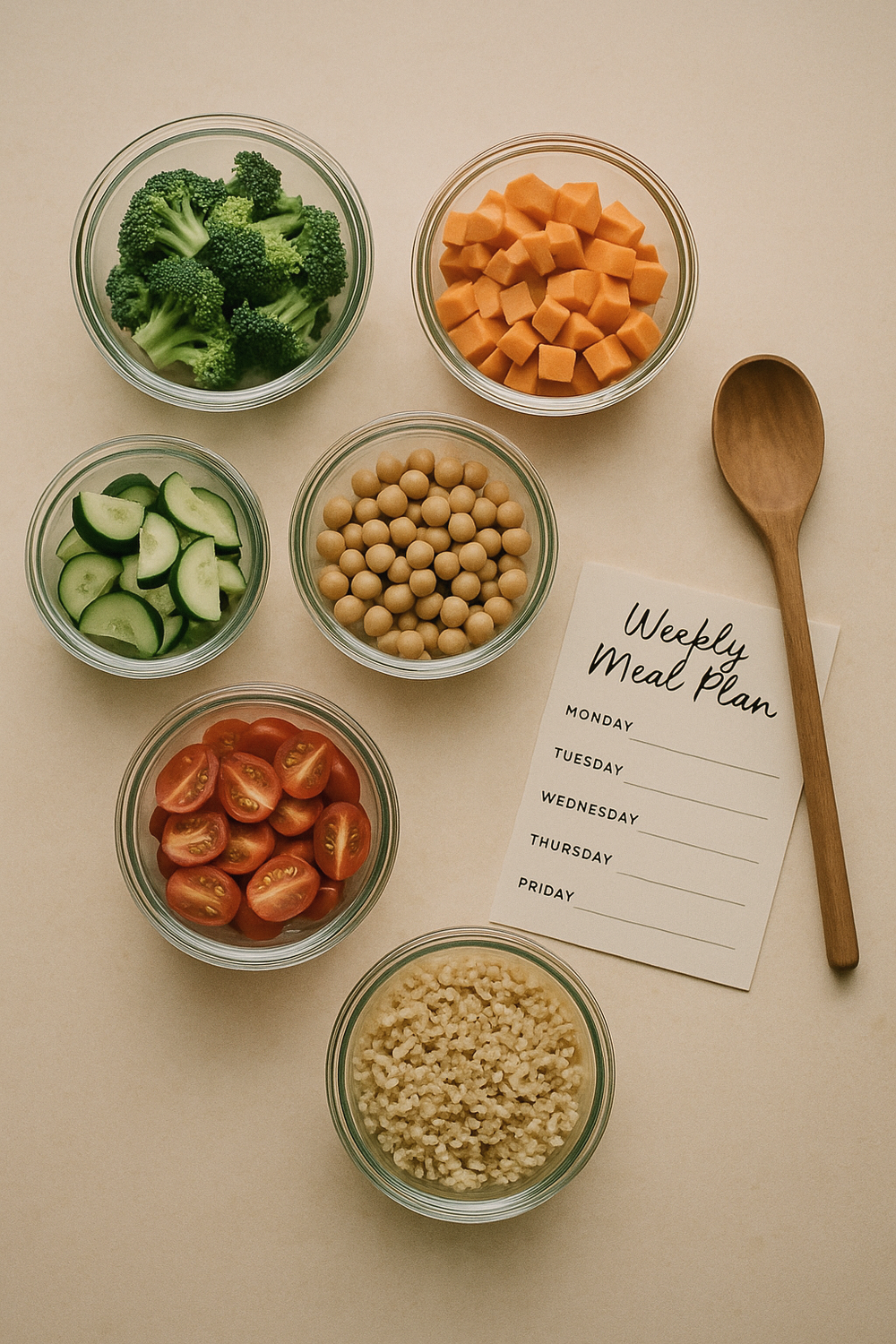
Batch cooking for the week removes the decision about what to eat when you are tired and hungry. Meal planning eliminates the need to make nutritious choices in the moment. Building a support system or joining a community - an explicit activity in Phase 4 and Phase 5 - creates external accountability that carries you through low-motivation periods. These are structural tools, not emotional ones. The people who appear to be motivated are often just well-prepared.
Why these myths persist
All five myths share something in common: they make weight loss feel like a test of character rather than a skill to build. If you overhaul everything at once and it collapses, that is a willpower failure. If you eat very little and stall, you must not be disciplined enough. If the scale does not move, nothing is working. If you regain weight, you lost motivation. If someone else succeeded, they just wanted it more. These interpretations keep people in a loop of effort, collapse, and restart - because they are looking for the right mindset rather than the right system. A structured, phased approach is not more demanding than starting over every few weeks. It is considerably less so.
About Wellbody
Wellbody is a body-health app that replaces the stack. One goal. Three daily actions. Fitness, nutrition, mindfulness, and recovery - connected behind the scenes so you don't have to manage the pieces. The plan adjusts around what you actually did today, and grows with you: month six looks nothing like month one. No dashboards, no re-planning. You just keep showing up.