
Most weight loss attempts do not fail for lack of effort. They fail because the habits involved never connect. Tracking food, drinking more water, cooking at home, moving more - each one gets started in isolation, and each one eventually gets dropped in isolation. Nothing holds them together when life gets busy.
Habit stacking solves this by building a chain where each behavior cues the next. Instead of five separate habits you have to remember and sustain individually, you have one sequence that reinforces itself. When one link slips, the chain helps pull you back rather than leaving you to start from scratch. For consistent weight loss, this sequence starts with one reliable anchor and adds layers from there.
The anchor: your daily food diary
The anchor is the habit that everything else attaches to. For weight loss, it is a daily food diary - a simple record of what you eat and roughly how much. It does not need to be precise. It needs to be consistent. Phase 1 of a structured weight loss approach starts here, with food tracking as the foundational behavior. The action is called Start Your Food Diary, and it matters not because logging calories is magic, but because awareness is the precondition for every other behavior change. You cannot adjust what you cannot see.
Layer 1: portion control follows awareness
Once you are consistently recording what you eat, the first layer that attaches is portion awareness. When you see your food written down, portion sizes become concrete rather than estimated. Phase 1 builds this directly - Portion Control Basics and Serving Sizes Matter are woven into the first sample week alongside the diary. This layer does not require weighing everything. It requires looking at what you logged and noticing where portions have drifted. The diary makes that possible. Without it, there is nothing to respond to.

Layer 2: hydration follows the portion check
The second layer is hydration - aiming for at least eight glasses of water per day. This attaches to the portion layer because both are nutrition behaviors happening across the day, and pairing them makes each easier to remember. In the Phase 1 sample week, Hydration Reminder and Water Check-In actions appear on the same days as portion tracking. This is not coincidence. When you are already paying attention to what goes into your body, adding a water target to that attention costs very little extra effort. The habit piggybacks on the one already running.
Layer 3: meal planning follows hydration
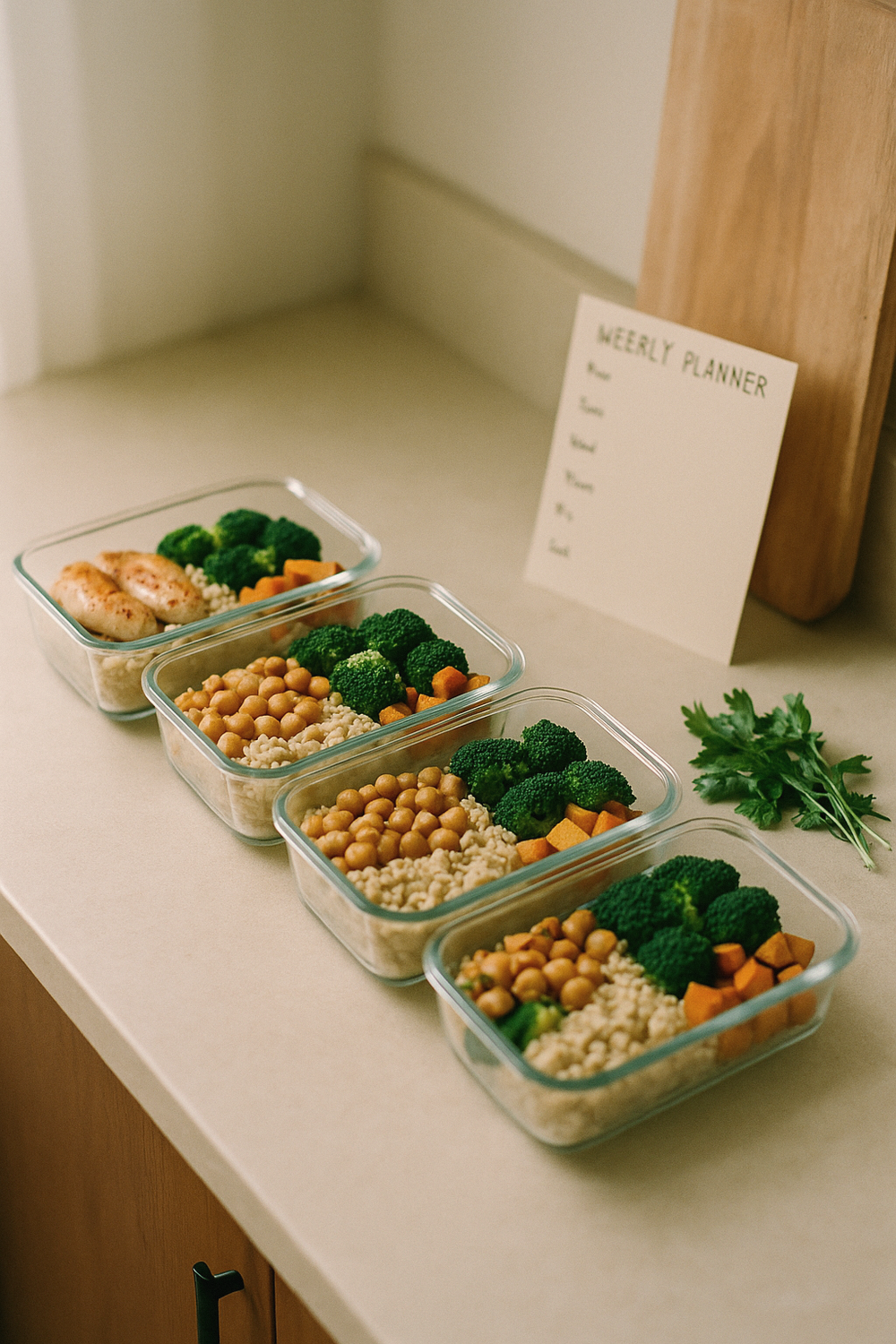
By the time you have a food diary, portion awareness, and a hydration routine running, you have enough data to plan ahead. Phase 2 of the weight loss journey is called Building a Balanced Meal Plan, and it works precisely because the earlier layers have already generated the information you need. You know what you have been eating, where portions have been off, and what your body responds to. A weekly meal plan built on that foundation is specific rather than generic. Batch-cooking meals in advance - one of the key Phase 2 activities - removes the last-minute decisions that most often derail consistent eating.
Wellbody builds the system for you.
3 daily actions across fitness, nutrition, mindfulness, and recovery.


The meal plan layer is where weight loss becomes easier rather than harder. When food decisions are made once a week instead of three times a day, the mental load drops and the consistency goes up.
Layer 4: movement follows the plan
Physical activity is Phase 3 territory - it layers in once the nutrition foundation is stable, not before. This sequencing matters. Starting with exercise before eating habits are settled splits your attention across two demanding behavior changes simultaneously, which increases the chance both will fail. Once your meals are planned, prepped, and largely consistent, adding movement is a natural extension rather than a competing demand. Phase 3 activities include establishing a workout schedule and incorporating strength training twice a week - both of which are far easier to maintain when they are not fighting for the same limited willpower as a new diet.
What breaks the stack and how to rebuild it
The anchor breaks most often during high-stress weeks when food logging gets skipped. A few days without the diary, and the portion awareness fades, the water intake slips, the meal plan does not get made, and suddenly it feels like everything has collapsed at once. It has not. Only the anchor broke.
The rebuild is always the same: return to the diary, not to day one. When the anchor is reinstated, the layers reattach far faster than they were built the first time. Phase 5 of the lose-weight journey - Maintenance and Lifestyle Integration - includes strategies for managing exactly this kind of disruption. Alongside the diary, a brief end-of-day reflection (Day 6 in the sample week is called Reflection and Adjustment) is what keeps the stack accurate over time. It is the habit that lets the system adapt to a real life instead of assuming life stays predictable. With three daily actions in Wellbody, each layer builds on the one before it - so when you come back after a rough week, you know exactly where to start.
About Wellbody
Wellbody is a body-health app that replaces the stack. One goal. Three daily actions. Fitness, nutrition, mindfulness, and recovery - connected behind the scenes so you don't have to manage the pieces. The plan adjusts around what you actually did today, and grows with you: month six looks nothing like month one. No dashboards, no re-planning. You just keep showing up.