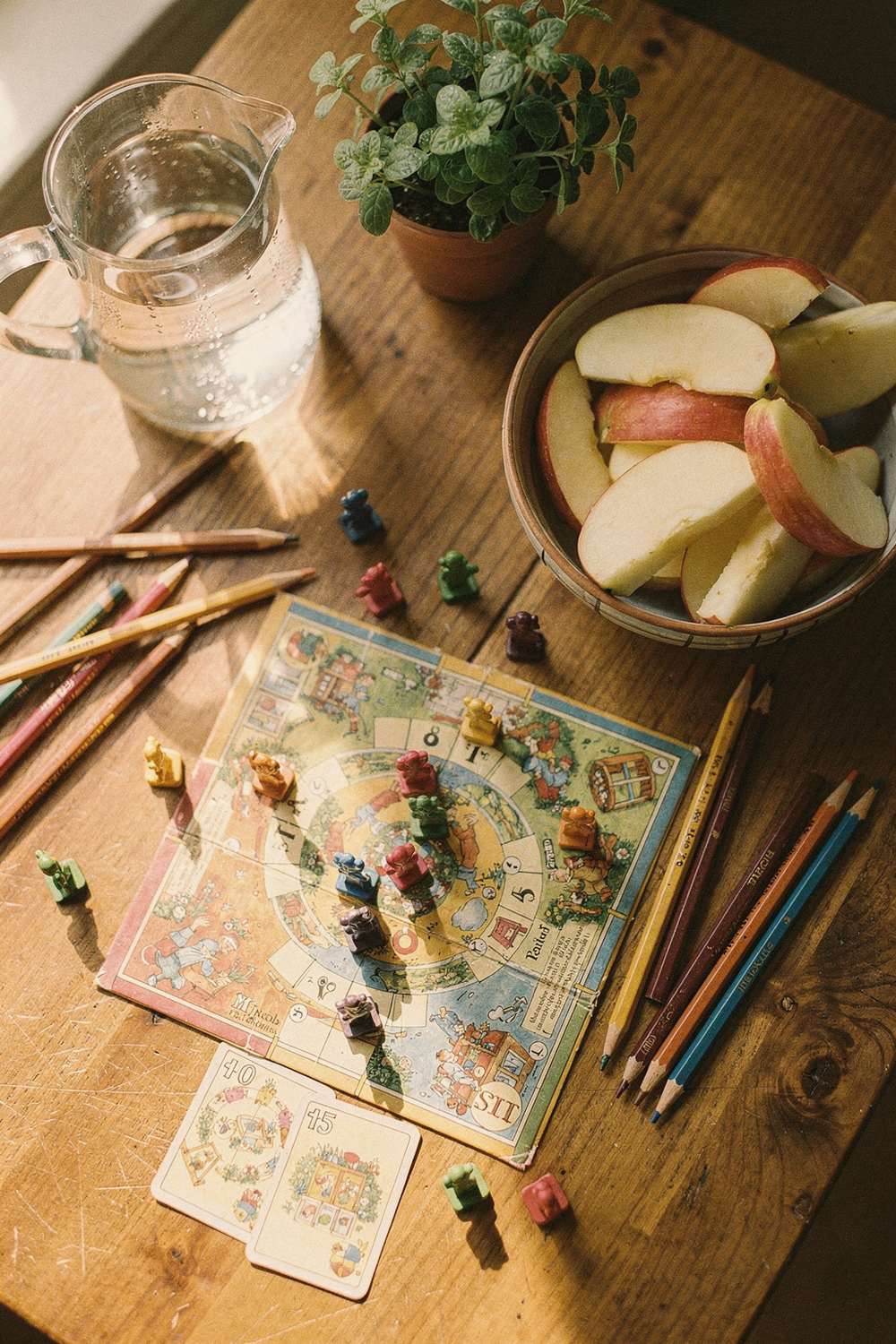
When families decide to get healthier, they almost always start with food. Cut out the junk. More vegetables at dinner. Pack better lunches. And nutrition matters. But when you look at the data behind how healthy family habits actually form and stick, food is a supporting player in a much bigger system.
The primary goal of modeling healthy habits for your family is categorized as Mindfulness. Not Nutrition. Not Fitness. Mindfulness. That classification is not a filing error. It reveals something fundamental about how family health actually works.
The first action is not a meal plan
Day 1 of building family health habits starts with Set the Stage for Family Time and Plan Your First Activity. The first Nutrition action does not appear until the third slot: Snack Attack Preparation. The system is making a deliberate choice. Before anyone eats differently, the family needs to be spending time together. Connection before calories.
Day 2 introduces Dive into Family Time, a Fitness action. Not a workout. A family activity that involves moving together. Followed by Positive Interaction Focus, which strengthens emotional connection, and then a reflection action. Two days in and the system has covered Fitness, Wellness, Nutrition, and Reflection. Not by accident. By architecture.
Fitness shows up as play, not exercise
The Fitness dependency evolves across four phases in a way that reveals the system's strategy. Phase 1 introduces daily family activities lasting about 30 minutes. Phase 2 adds family fitness challenges. Phase 3 creates monthly sports days. Phase 4 extends into community service projects with a physical component.
Not once does the system prescribe exercise. It prescribes shared movement. The distinction matters enormously with families. Children do not need to be taught to exercise. They need to see their parents moving. They need activities where the family moves together, where fitness is embedded in fun rather than separated into a chore.
The weekly dependency makes it specific: the family should aim for balanced meals that support energy for physical activity. Nutrition is not the goal. Nutrition supports the real goal, which is having enough energy to be active together.
Recovery is tracked for the whole family
Every phase tracks recovery as a dependency. Phase 1 flags downtime and relaxation techniques. Phase 2 adds light stretching and cooldowns after family activities. Phase 3 introduces rest days and recovery strategies. Phase 4 specifically tracks recovery time after community service.
This is unusual. Most family wellness programs do not acknowledge that being healthy as a family is tiring. Planning activities, managing schedules, preparing food, dealing with resistance from kids who would rather watch screens. All of that takes energy. The system builds in recovery not just for the body but for the parent who is orchestrating everything.
Wellbody's family habits plan tracks recovery in every phase, not just for physical activity but for the emotional labor of building family health. Day 4 of Week 1 includes Recharge Before Fun. Day 6 includes Relax and Recharge. The system knows that the parent driving this change needs rest too.
Sleep connects everything
Sleep appears as a dependency in every week across all four phases. The specifics shift: adequate rest to participate actively in Phase 1 becomes consistent bedtime routines in Phase 3 becomes priority rest before workshops in Phase 4.
Wellbody builds the system for you.
3 daily actions across fitness, nutrition, mindfulness, and recovery.


This dependency cuts across the entire family. Parents who sleep poorly have less patience for the activities the system prescribes. Children who sleep poorly have less energy for the movement the system builds in. Nobody eats well when they are exhausted. Sleep is not a separate health goal for families. It is the foundation that every other habit sits on.

The real insight: it is about the environment, not the rules
The Social and Environmental dependency appears in every week with specific, practical guidance. Phase 1: create welcoming spaces free from distractions. Phase 2: build a positive atmosphere that encourages participation. Phase 3: create calm spaces for mindfulness and peaceful dining atmospheres. Phase 4: strengthen community ties.
This is why the goal is categorized as Mindfulness. The primary work of family health is not choosing better food or doing more exercise. It is creating an environment where healthy choices become the path of least resistance. A dining table with no phones. A park trip that happens at the same time every Saturday. A kitchen where healthy snacks are visible and junk is not.
You are not changing behavior. You are changing the conditions that produce behavior. The food follows the environment. The movement follows the connection. The habits follow the culture you build inside your family.
Beyond the family
Phase 4 expands the scope from family to community: service projects, workshops, vision boards, individual leadership initiatives. The system does not stop at making your family healthier. It builds toward a point where your family becomes a source of health for other families.
That progression is the real map. Start with connection. Add movement through play. Build nutrition around shared meals. Protect recovery for the whole family. Shape the environment. Then extend outward. That is what building healthy family habits actually requires. The food is important. But it is not the foundation. The foundation is everything else.
About Wellbody
Wellbody is a body-health app that replaces the stack. One goal. Three daily actions. Fitness, nutrition, mindfulness, and recovery - connected behind the scenes so you don't have to manage the pieces. The plan adjusts around what you actually did today, and grows with you: month six looks nothing like month one. No dashboards, no re-planning. You just keep showing up.