
You bought the blackout curtains. You downloaded the white noise app. You take magnesium at 9pm and put your phone in another room by 10. And yet - you still wake up at 3am, stare at the ceiling, and drag yourself through the next day.
The sleep advice you've been following isn't wrong. It's just incomplete. The wellness industry treats sleep as a standalone problem - something you fix with a better pillow or a bedtime ritual. But the data inside Wellbody's sleep improvement program tells a different story. Sleep quality is a downstream effect of how you eat, how you move, how you manage stress, and how you set up your physical environment. Fix the bedtime routine without fixing those four inputs, and you're treating symptoms while ignoring the cause.
Wellbody's Improve My Sleep Quality goal spans four phases - from basic sleep awareness through advanced hygiene, behavioral adjustments, and long-term mastery. But at every single phase, the system tracks cross-pillar dependencies across nutrition, movement, mental health, recovery, and social-environmental factors. Here's what those dependencies reveal.
Nutrition: what you eat decides how you sleep
Most people think of nutrition and sleep as separate categories. The system disagrees. In Phase 1, Week 2, the nutrition dependency is direct: "Avoid heavy meals close to bedtime to minimize disruption." By Week 4, it gets more specific: "Consider light snacks that promote sleep, like bananas or almonds."
Phase 2 escalates this even further. Week 2 introduces sleep-friendly foods as a formal dependency: "Incorporate sleep-friendly foods into dinner, such as turkey or chamomile tea." By Week 4, evaluating your diet for sleep impact becomes an actual task - not a side note, but a core action: "Evaluate your diet concerning sleep and incorporate sleep-friendly foods, such as almonds and kiwi."
And by Phase 3, the nutrition dependency shifts from specific foods to systemic patterns: "Focus on foods that promote sleep, like almonds or chamomile tea in the evening" and "Focus on meals that promote sleep, avoiding caffeine late in the day." The message is clear - you can't optimize sleep while ignoring what you eat, when you eat it, and how your body processes it before bed.
No sleep tracker tells you this. It just scores your night and leaves you guessing.

Movement: the 30-minute threshold nobody mentions
Here's a dependency that surprises most people: by Phase 3 of the sleep program, daily physical activity becomes a core task. Not a suggestion - a requirement. "Introduce physical activity into your daily routine, aiming for at least 30 minutes most days. Choose activities you enjoy, such as walking or cycling."
This isn't about exhausting yourself into sleep. It's about regulating your circadian rhythm. The system doesn't introduce intense exercise in Phase 1 - it waits until you've built awareness and basic habits first. Then it layers in movement as the thing that makes everything else work better. By Week 8 of Phase 3, the guidance evolves: "Increase intensity or duration slightly" - a progressive approach that mirrors how the body actually adapts.
The recovery dependency reinforces this: "Ensure to stretch or cool down after physical activity to prevent soreness." If you exercise but don't recover, you create inflammation and discomfort that disrupts the sleep you're trying to improve. Movement helps sleep - but only when paired with proper recovery.
Stress and mental health: the part you can't supplement away
From the very first week of Phase 1, the mental wellness dependency appears: "Consider mindfulness practices to ease into sleep." By Week 2: "Practice stress-relief techniques to minimize anxiety before bed." These aren't optional add-ons. The system treats them as load-bearing pillars.
Phase 3 introduces cognitive behavioral techniques as a dedicated action: "Consider cognitive behavioral techniques for insomnia, such as reframing negative thoughts about sleep. Dedicate 15 minutes each evening to practice these techniques." It also brings in mindfulness and yoga: "Explore relaxation and mindfulness practices, such as yoga or guided imagery, to reduce anxiety before sleep."
Wellbody builds the system for you.
3 daily actions across fitness, nutrition, mindfulness, and recovery.


This is where most sleep advice falls short. You can take every supplement, set every alarm, and build the perfect dark-cool-quiet bedroom - but if your nervous system is running in overdrive, none of it matters. Melatonin doesn't override cortisol. A weighted blanket doesn't resolve the worry loop playing on repeat in your head. The system knows this, which is why it builds stress management into the sleep plan from day one.
Environment: more than just a dark room
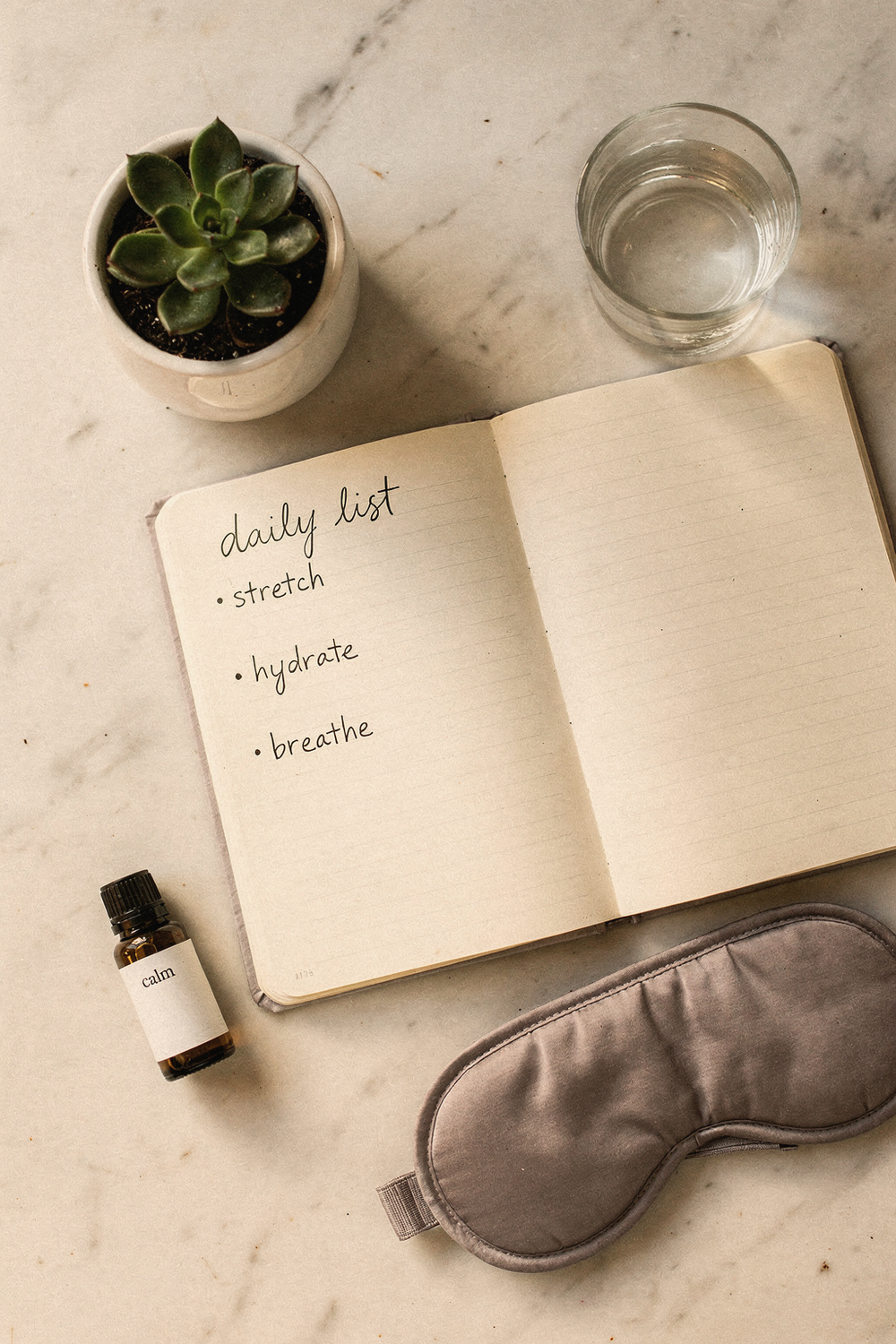
The social-environmental dependency in the sleep program goes beyond the standard "make your room dark and cool" advice. In Phase 1, Week 1: "Communicate with housemates/family about your sleep needs." Week 3: "Inform others of your schedule to minimize disturbances." Phase 2 adds: "Create a calming bedroom environment by dimming lights and reducing noise" and later, "Consider using calming scents like lavender in your bedroom."
The system also tracks bedding and physical comfort. Phase 2, Week 5 introduces a task to "experiment with different sleep positions and bedding materials to find what works best for you." Your environment isn't just about light and temperature - it includes the social dynamics of your household, the physical setup of your bed, and the sensory inputs your brain processes as you wind down.
When you pick "Improve My Sleep Quality" in Wellbody, you get sleep-focused actions - but the system quietly layers in nutrition timing, daily movement targets, cognitive behavioral techniques, mindfulness practices, and environmental adjustments. Because a sleep plan that only addresses bedtime isn't a system. It's a checklist.
Why the cross-pillar approach works
The conventional approach to sleep improvement is linear: fix your schedule, fix your room, maybe take something. Wellbody's approach is systemic. In Phase 1, you build awareness and basic habits while the system monitors nutrition, stress, recovery, and social environment. In Phase 2, you add advanced hygiene while the system introduces sleep-friendly foods and pre-sleep rituals. In Phase 3, you layer in 30 minutes of daily movement, cognitive reframing, and mindfulness - all explicitly tied to sleep outcomes.
Each phase builds on the last, and each pillar supports the others. Good nutrition reduces nighttime disruptions. Daily movement regulates your circadian clock. Stress management quiets the mental chatter. Environmental adjustments remove friction. Recovery ensures that movement helps instead of hurts. None of these pillars works in isolation - and that's exactly the point.
Sleep isn't a single habit to optimize. It's the result of every other habit you have. Stop chasing the perfect bedtime routine. Start building the body health system that makes sleep inevitable.
About Wellbody
Wellbody is a body-health app that replaces the stack. One goal. Three daily actions. Fitness, nutrition, mindfulness, and recovery - connected behind the scenes so you don't have to manage the pieces. The plan adjusts around what you actually did today, and grows with you: month six looks nothing like month one. No dashboards, no re-planning. You just keep showing up.