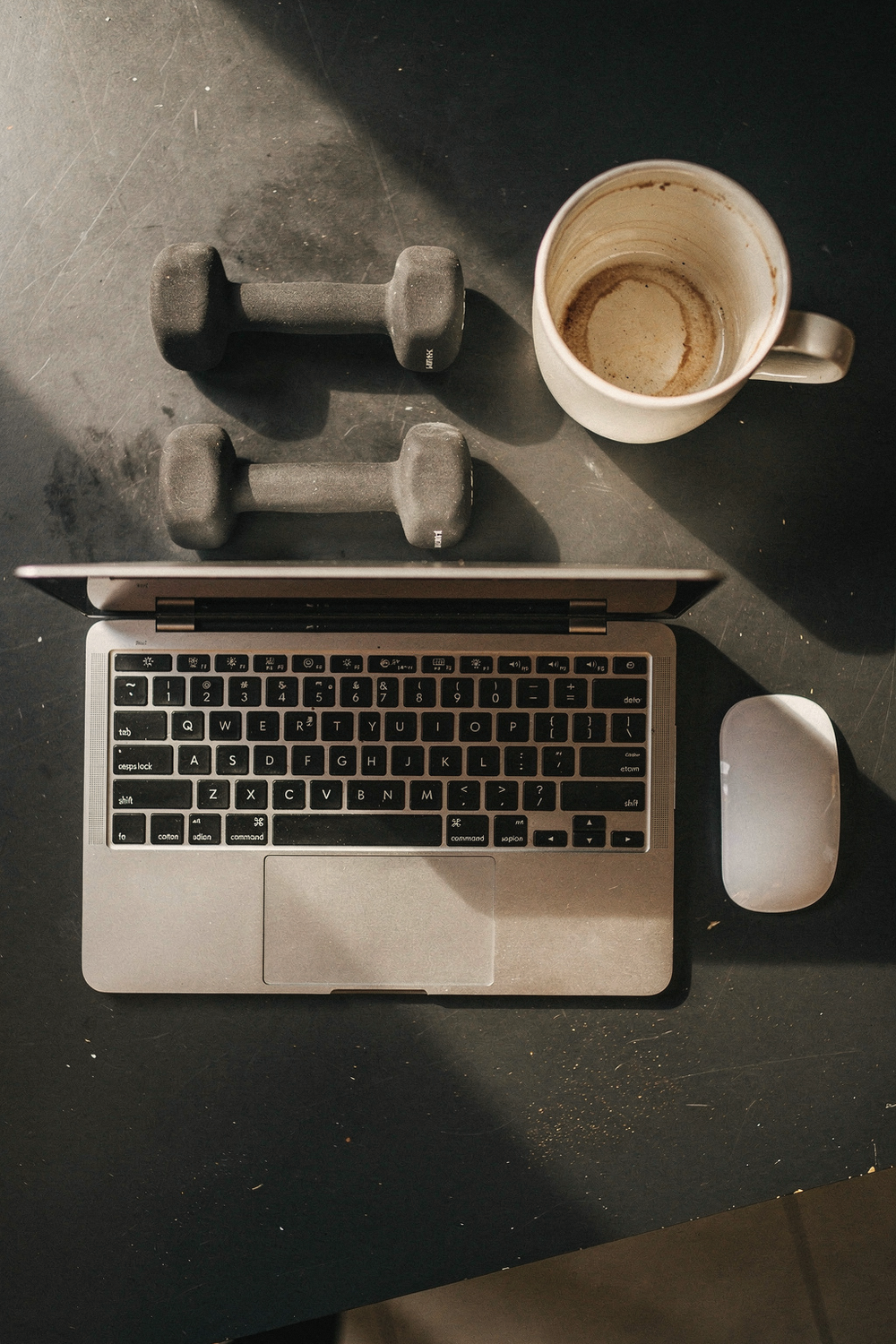
You go to the gym four times a week. You lift. You run. You stretch afterwards, most of the time. And then you sit at a desk for the next eight hours, barely moving except to refill your coffee. You tell yourself the workout cancels it out. It doesn't.
The wellness industry has spent years selling the idea that exercise is the antidote to a sedentary life. One hour of movement to offset seven or eight hours of stillness. But the research tells a different story. Prolonged sitting creates problems that a gym session - no matter how intense - can't fully reverse. And the damage goes far beyond tight hip flexors.
Wellbody's sedentary job program runs across three phases, from basic mobility awareness through strengthening and flexibility to advanced activity integration. But even in Phase 1, when the primary focus is posture assessment and daily stretching, the system is tracking dependencies across four other pillars. Here's what sitting is actually doing to you - and why fixing it requires more than a better workout.
Your metabolism slows down - and your meals aren't timed for it
When you sit for extended periods, your body's ability to regulate blood sugar and process fats drops significantly. Lipoprotein lipase - the enzyme responsible for breaking down fat in your bloodstream - decreases by up to 90% during prolonged sitting. That means even if your diet is clean, your body isn't processing it efficiently while you're at your desk.
From the very first week of Wellbody's program, the nutrition dependency is flagged: ensure a balanced diet to support energy levels for daily activities. By Phase 2, when bodyweight strength training enters the routine, the system gets more specific about nutrient timing around workouts. In the advanced phase, it tracks pre- and post-workout nutrition to support performance - because when you eat matters almost as much as what you eat when your body spends most of its day in low-metabolism mode.
Most fitness apps will tell you what to eat. None of them adjust that advice based on how many hours you've been sitting. The body health approach does.
Sitting is a stress position - and nobody treats it that way
Here's something that surprises most people: sitting at a desk is a chronic low-grade stressor. Compressed posture restricts breathing. Shallow breathing activates the sympathetic nervous system. Elevated cortisol follows. By the end of a workday, your body has been running a subtle stress response for hours - even if your mind feels fine.
The Wellbody system flags this from day one. In Phase 1, the mental wellness dependency reads: practice mindfulness to reduce stress and enhance focus on activities. By Phase 2, it introduces posture awareness techniques - hourly reminders to check and correct your posture - categorized not just under fitness, but linked to mindfulness as a stress-reduction tool. Phase 3 brings a weekly reflection journal and dedicated stress-relief activities like meditation and deep breathing.
Elevated cortisol doesn't just make you feel tense. It promotes fat storage around the midsection, disrupts sleep, and undermines recovery. A five-minute posture check that also functions as a mindfulness reset might do more for your body composition than an extra set of squats.
Your sleep suffers - and you probably blame the screen
People who sit for most of the day report worse sleep quality, even when they exercise regularly. The mechanism is straightforward: insufficient physical movement during the day means your body doesn't build enough sleep pressure - the natural accumulation of adenosine that makes you feel tired at night. You can exhaust yourself in a one-hour workout, but the other 15 waking hours matter more for sleep architecture.
Every single week of the Wellbody sedentary job plan includes a sleep dependency. Phase 1 starts with the basics: aim for 7-8 hours of quality sleep to enhance recovery and focus. By Phase 2, the guidance evolves into prioritizing sleep hygiene and monitoring sleep quality. In Phase 3, the system connects sleep directly to workout performance and recovery from cross-training sessions.
You're not sleeping poorly because of your phone. You're sleeping poorly because your body didn't move enough between 9am and 5pm. The 5-minute walking breaks every hour that Wellbody introduces in week one aren't just about posture - they're about building the kind of distributed daily movement that supports deep sleep.
Wellbody builds the system for you.
3 daily actions across fitness, nutrition, mindfulness, and recovery.


Recovery doesn't start after your workout - it starts during your workday
In Phase 1, the recovery dependency is simple: incorporate light stretching post-activity to aid recovery. But by Phase 2, when the program adds bodyweight strength training three times per week and yoga or pilates twice per week, the recovery requirements expand. The system calls for rest days between strength sessions, foam rolling, and monitoring fatigue levels.
Here's the part most programs miss: if you're sitting in a compressed position all day, you're entering your workout already in a recovery deficit. Your hip flexors are shortened. Your thoracic spine is locked. Your glutes have been inactive for hours. The workout doesn't start fresh - it starts from a compromised position. And then you sit right back down afterwards.
Wellbody's approach treats the workday itself as part of the recovery equation. Position changes every hour. Standing desk trials in Phase 2. Dynamic stretching before workouts in Phase 3. Gentle yoga on rest days. The program doesn't ask you to recover harder after work - it reduces the damage you accumulate during work.
When you select "Reverse the Effects of a Sedentary Job" in Wellbody, you get mobility and fitness actions - but the system also weaves in nutrition timing, mindfulness check-ins, sleep hygiene prompts, and recovery practices throughout your workday. Because a body that sits for 8 hours needs more than a gym pass. It needs a system that works during the sitting, not just after it.
The real fix isn't more gym time
The instinct, when you hear that sitting is undermining your fitness, is to train harder. Add another session. Go longer. Push through it. But that's the same single-pillar thinking that created the problem. More exercise doesn't fix poor nutrient timing around sedentary hours. It doesn't address the cortisol accumulation from compressed breathing. It doesn't rebuild the sleep architecture that eight hours of stillness disrupts.
Wellbody's sedentary job program evolves across three phases - from awareness and basic mobility through strengthening and flexibility to advanced activity integration. But at every phase, the system is managing five pillars simultaneously. The walking breaks feed your sleep. The posture reminders reduce your stress. The nutrient timing supports your metabolism. The yoga sessions handle your recovery. No single workout does all of that.
You don't need a longer gym session. You need movement threaded through the hours you're sitting still. Stop trying to outrun your desk. Start building a system that works with your workday, not against it.
About Wellbody
Wellbody is a body-health app that replaces the stack. One goal. Three daily actions. Fitness, nutrition, mindfulness, and recovery - connected behind the scenes so you don't have to manage the pieces. The plan adjusts around what you actually did today, and grows with you: month six looks nothing like month one. No dashboards, no re-planning. You just keep showing up.