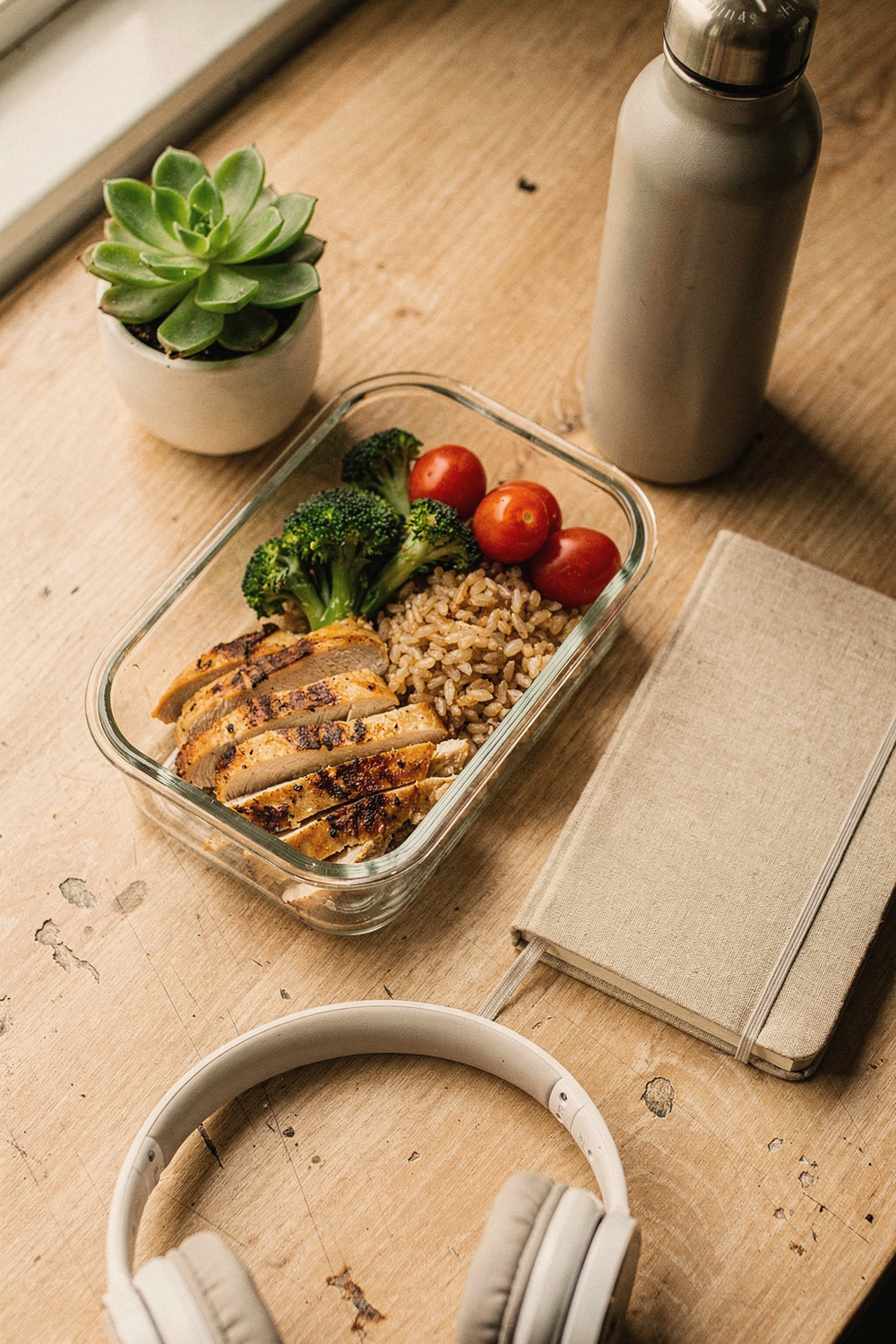
You have tried Pomodoro timers. You have tried time blocking. You have tried getting up at 5am. You have tried every productivity system that promises to squeeze more output from your hours. And yet by mid-afternoon you are staring at your screen with the focus of someone who has been awake for 30 hours.
The problem is not your schedule. The problem is what your schedule ignores.
What a productivity goal actually tracks
When you look at a structured system for increasing productive hours, the goal description is revealing. It does not say manage your time better. It says build the physical and mental stamina needed to maintain deep focus for extended periods without mental fatigue. Stamina. Not scheduling.
In the first week, there are 21 actions. Fifteen are Wellness: workspace setup, daily scheduling, mindfulness meditation, journaling, social support. Four are Nutrition: hydration, balanced meals, meal prep. Two are Recovery: scheduled breaks and sleep. Zero are about time management techniques.
The time management experiments do not appear until Phase 2. The system treats them as tools to try after the foundation is built, not as the foundation itself.
The nutrition dependency nobody mentions
Every single week of the productivity system tracks a nutrition dependency. Week 1: ensure balanced meals to maintain energy levels throughout the day. Week 3: focus on meals that boost brain function, such as omega-3 rich foods. Week 5: focus on nutrient-dense foods that support cognitive function.
This is not a generic eat healthy reminder. The dependencies get more specific as the phases progress. By the time you are doing 2-hour deep work sessions in Phase 3, the system is tracking what you eat because what you eat directly determines how long you can focus.
No time management app accounts for this. You can block off a perfect 3-hour focus window, but if you ate a blood-sugar-crashing lunch beforehand, those 3 hours are fiction.

Sleep is the ceiling on your output
Sleep appears as a dependency in every week across all three phases. Week 1: aim for 7 to 8 hours of sleep each night to support focus and productivity. Phase 2 adds: develop a consistent sleep schedule to enhance overall alertness. Phase 3 maintains it throughout 19 weeks of deep work practice.
The system treats sleep as a hard constraint, not a nice-to-have. You cannot build work sessions from 30 minutes to nearly 3 hours if you are running on 5 hours of sleep. The ceiling on your productive output is set the night before, and no morning routine can raise it.
Recovery is productivity infrastructure
Day 3 of Week 1 introduces a Recovery action: schedule a 10-minute break after every hour of focused work. This is not a reward for working hard. It is infrastructure for working longer.
Wellbody builds the system for you.
3 daily actions across fitness, nutrition, mindfulness, and recovery.


Phase 2 extends this with rest days, relaxation techniques after work sessions, and active recovery. Phase 3 adds explicit downtime between deep work blocks. The system is not just building stamina. It is building the recovery that makes stamina sustainable.
Most productivity advice treats breaks as lost time. The data treats breaks as the thing that prevents a 4-hour focus capacity from collapsing into a 45-minute one.
Wellbody's productive hours goal has 15 Wellness, 4 Nutrition, and 2 Recovery actions in Week 1. Zero are about time management. The system calls it what it is: building physical and mental stamina, not managing a calendar. Time management techniques appear in Phase 2, after 6 weeks of nutrition, sleep, and recovery foundations are in place.
The physical exercise surprise
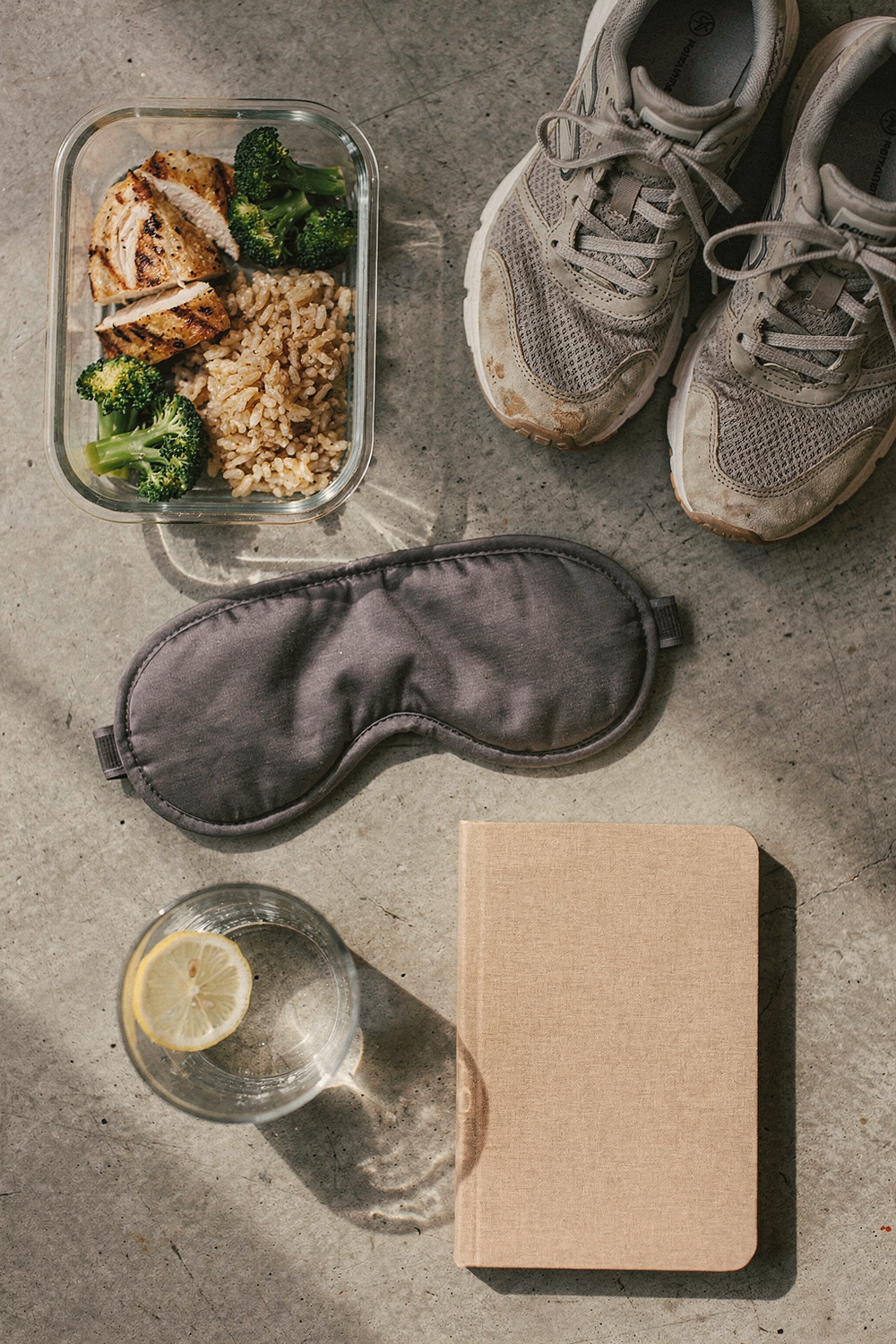
Phase 2 introduces physical exercise at least 3 times a week. For a productivity goal. The rationale is direct: exercise boosts energy levels. It is not there for health reasons, though it does that too. It is there because the system needs physical conditioning to support longer focus periods.
Over 10 weeks in Phase 2, work sessions increase from 30 minutes to nearly 3 hours. That kind of cognitive endurance requires a body that can sit and think for that long without fatigue. Exercise builds that capacity in a way that no focus app can replicate.
What this means for your afternoon crash
If you are fading by 2pm, the answer is probably not a better to-do list. Look at what you ate for lunch. Look at how you slept last night. Look at whether you took any real breaks in the morning. Look at whether you moved your body today.
The system tracks five dependencies every single week because productivity is not a scheduling problem. It is a stamina problem. And stamina is built from nutrition, sleep, recovery, environment, and exercise working together. Get the schedule right but miss the rest, and you have a beautifully organized calendar full of hours you cannot actually use.
About Wellbody
Wellbody is a body-health app that replaces the stack. One goal. Three daily actions. Fitness, nutrition, mindfulness, and recovery - connected behind the scenes so you don't have to manage the pieces. The plan adjusts around what you actually did today, and grows with you: month six looks nothing like month one. No dashboards, no re-planning. You just keep showing up.