
Most sleep advice treats each habit as a standalone fix - limit screens, keep a consistent schedule, make your room dark and cool. Applied individually, each one requires you to remember and choose it separately every evening. That is friction, and friction is why habits fail. A habit stack works differently: each behavior acts as the trigger for the next one. When the stack is built well, starting the first habit sets off a chain reaction that carries you through the rest automatically.
The anchor: a fixed wind-down time
Every habit stack needs an anchor - a behavior that already exists and can reliably trigger everything else. For sleep, the anchor is a fixed wind-down time, not your bedtime, but the moment you decide sleep preparation begins. This might be 9:30 PM, or 10:00 PM, or an hour before you need to be asleep.
The anchor works because it is time-based, which means you do not have to evaluate whether you are tired enough or feel like it. When the clock hits your wind-down time, the stack starts. Everything that follows attaches to this moment. Without a fixed anchor, the other habits float - they happen sometimes, not consistently.
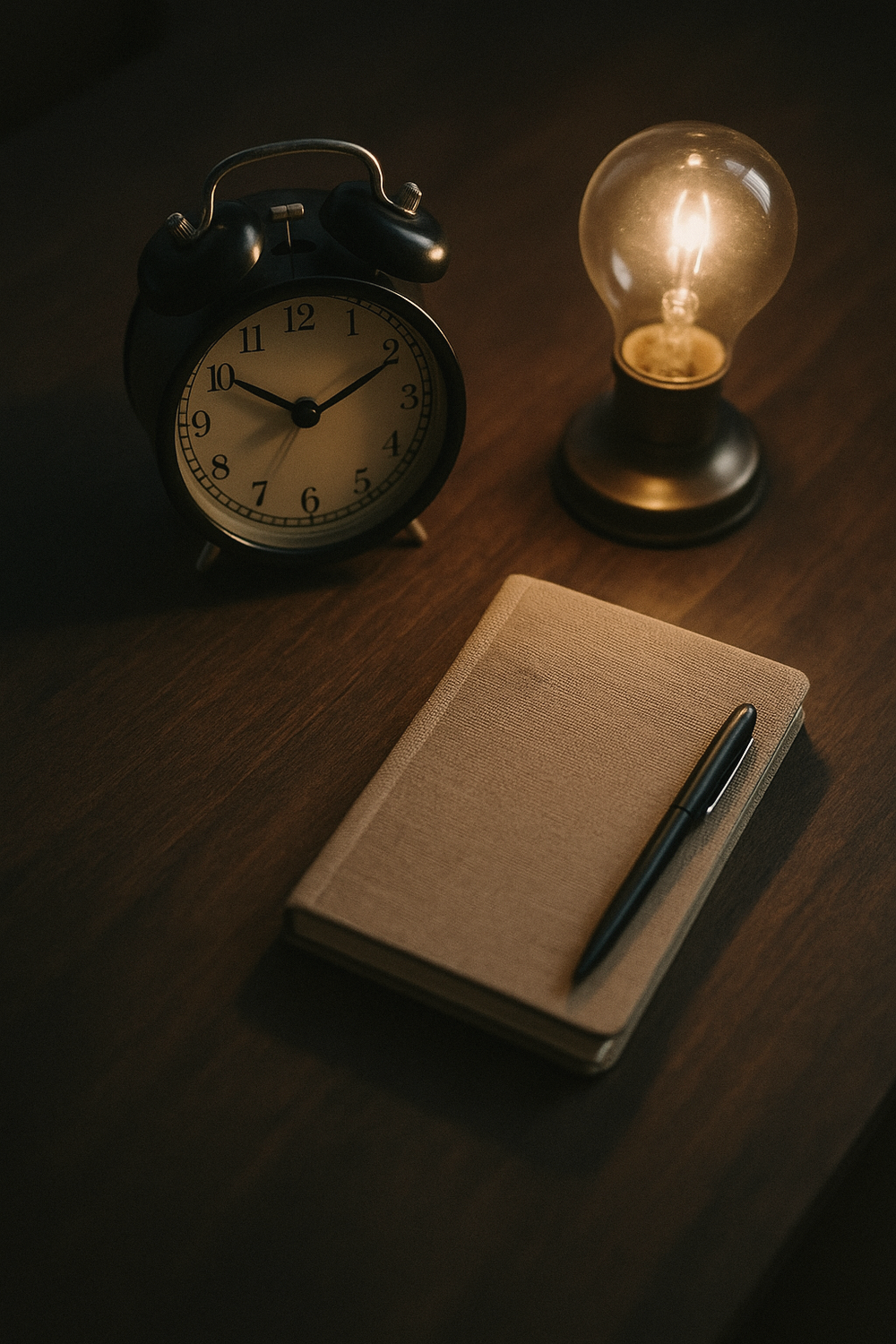
Layer 1: dim the lights and put the phone down
The moment your wind-down time arrives, dim the overhead lights and set your phone face-down or in another room. These two actions work together because bright light suppresses melatonin production and phone screens activate the part of your brain that scans for new information. Doing both at the same time doubles the signal to your nervous system that the day is ending.
Limiting screens to at least one hour before bed is a Phase 2 behavior in structured sleep programs, but many people find moving it to the wind-down anchor makes it easier to stick to than tracking the clock separately. The anchor creates the trigger. The dimming and phone removal follow automatically.
Layer 2: one calming activity that is always the same
After lights dim and phone is down, move into one calming activity. Reading physical books, light stretching, gentle yoga, or a short breathing exercise all work. The specific activity matters less than the consistency. It should be the same activity at the same point in your stack every night.
The environment you sleep in acts as a cue. A dark, cool, quiet room tells your body it is time to sleep before you have done anything else. Setting up your environment at the start of your wind-down stack reinforces every habit that follows. Think of it as setting the stage - the other habits perform better when the environment is ready.
Wellbody builds the system for you.
3 daily actions across fitness, nutrition, mindfulness, and recovery.


Consistency is what creates the Pavlovian effect. After two to three weeks of doing the same calming activity at the same point each night, the activity itself starts to make you drowsy because your brain has learned to associate it with sleep. The activity becomes a biological signal, not just a nice thing to do.
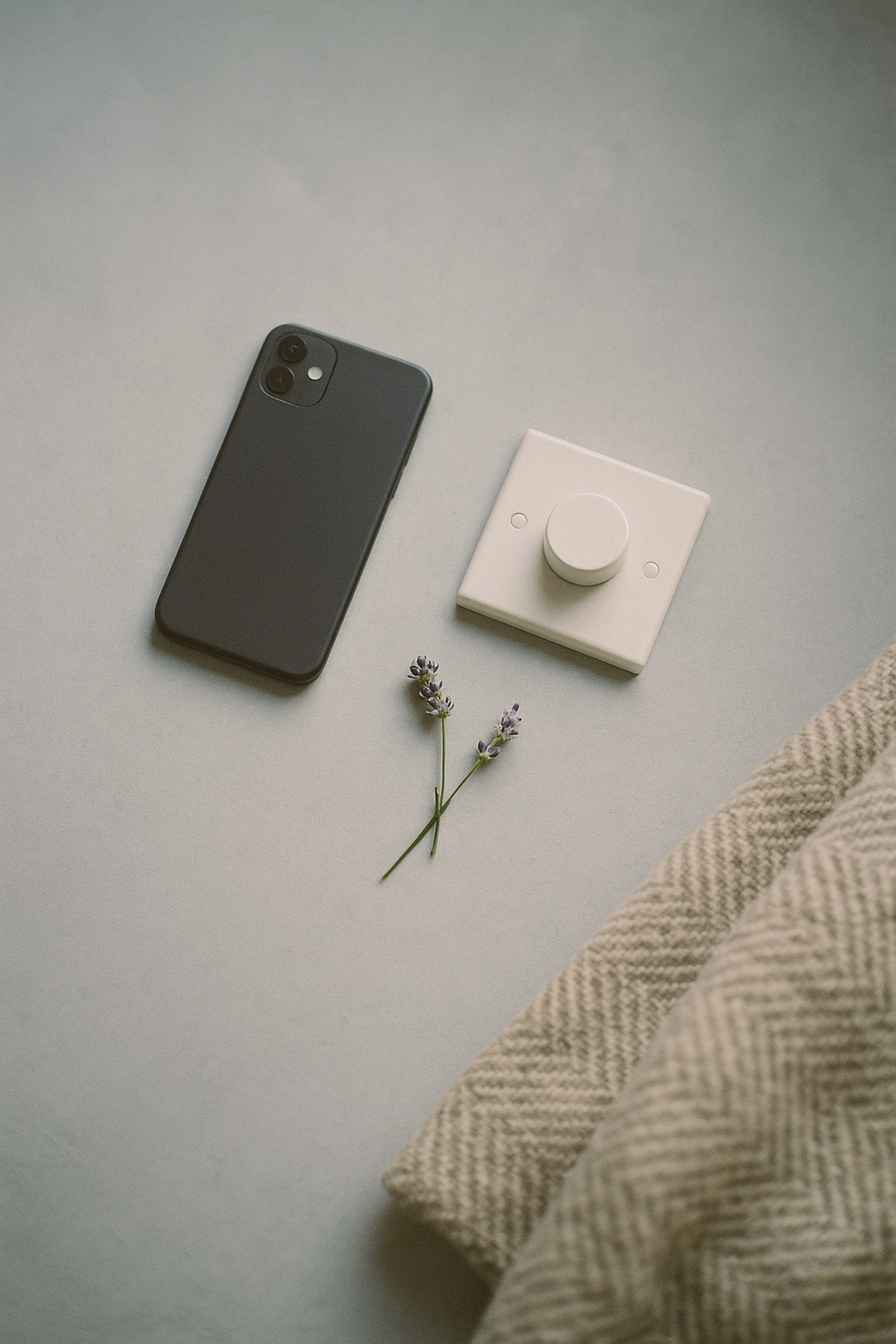
Layer 3: a brief relaxation technique before you get into bed
The final layer is a relaxation technique done outside of bed - not in it. Your bed should be associated only with sleep. Phase 1 of structured sleep programs treats relaxation techniques as a pre-sleep practice separate from the sleep environment itself. A five-minute body scan, three minutes of 4-7-8 breathing, or progressive muscle relaxation from your feet upward all work well. When this becomes Layer 3, it functions as the final gate - the last trigger before sleep rather than something you have to decide to do each night.
What breaks the stack and how to rebuild it
The most common reason a sleep habit stack collapses is a disrupted anchor. A late dinner, a social event, travel, or a work deadline pushes your wind-down time back, and without the anchor, none of the layers fire. This is not a character flaw - it is a structural gap.
When the stack breaks, do not try to run all three layers in compressed time. Just run Layer 1 - dim the lights, put the phone down - and get into bed. One layer is infinitely better than zero, and keeping Layer 1 alive means the full stack reconnects faster the following night. The anchor is the one thing worth protecting above everything else. If you can get back to a consistent wind-down time within two evenings of the disruption, the rest of the chain rebuilds on its own.
About Wellbody
Wellbody is a body-health app that replaces the stack. One goal. Three daily actions. Fitness, nutrition, mindfulness, and recovery - connected behind the scenes so you don't have to manage the pieces. The plan adjusts around what you actually did today, and grows with you: month six looks nothing like month one. No dashboards, no re-planning. You just keep showing up.