
Search for "how to build muscle" and you'll find a barbell program by Tuesday. Heavy compound lifts. Progressive overload from day one. Five meals a day with 200 grams of protein. It looks impressive on paper. It also ignores the fact that most people can't maintain that for more than a few weeks.
Real muscle building doesn't start with a barbell. It starts with bodyweight squats, a food journal, and the patience to build a foundation before you load it. Here's what the full arc actually looks like when a system manages the progression for you - from month one through month six and beyond.
Phase 1: Foundation building (weeks 1-8)
The first phase has almost nothing to do with heavy weights. It's about learning how your body moves and building the habits that will support everything that comes after.
The actions start simple: bodyweight exercises like push-ups, squats, and planks three to four times a week. Light resistance training with dumbbells or bands targeting major muscle groups. Mobility and flexibility work through dynamic stretching and yoga. And nutrition basics - learning about macronutrients and starting to track what you eat.
That last one surprises people. You expected to be in the gym by now, not logging meals. But here's the logic: muscle doesn't grow in a vacuum. It grows when you feed it properly, sleep enough, and recover between sessions. Phase 1 builds all of those systems at once.
By week 2, nutrition tracking is already part of the routine. By week 3, you're reinforcing consistency across all four activities. By week 6, you're not thinking about whether to stretch after training or log your meals. You just do it. That's the point. The foundation isn't just physical - it's behavioral.
The dependencies in this phase tell the real story: balanced meals to support energy, 7-9 hours of sleep for recovery, mindfulness practices to manage stress, proper hydration post-workout, and a dedicated workout space. Five pillars running in parallel before you've touched a barbell. Most fitness apps don't ask about your sleep. They should.
Phase 2: Strength development (weeks 9-20)
Now the intensity shifts. Phase 2 introduces structured strength training with a split routine targeting different muscle groups on different days. Progressive overload - increasing weights or resistance every week - becomes a core focus. Compound movements like deadlifts, bench presses, and rows enter the program.
Notice the timing. You didn't start deadlifting in week one. You spent two months building the movement patterns, nutrition habits, and recovery discipline to support heavier loads. When the barbell finally shows up, your body is ready for it and your habits can sustain it.
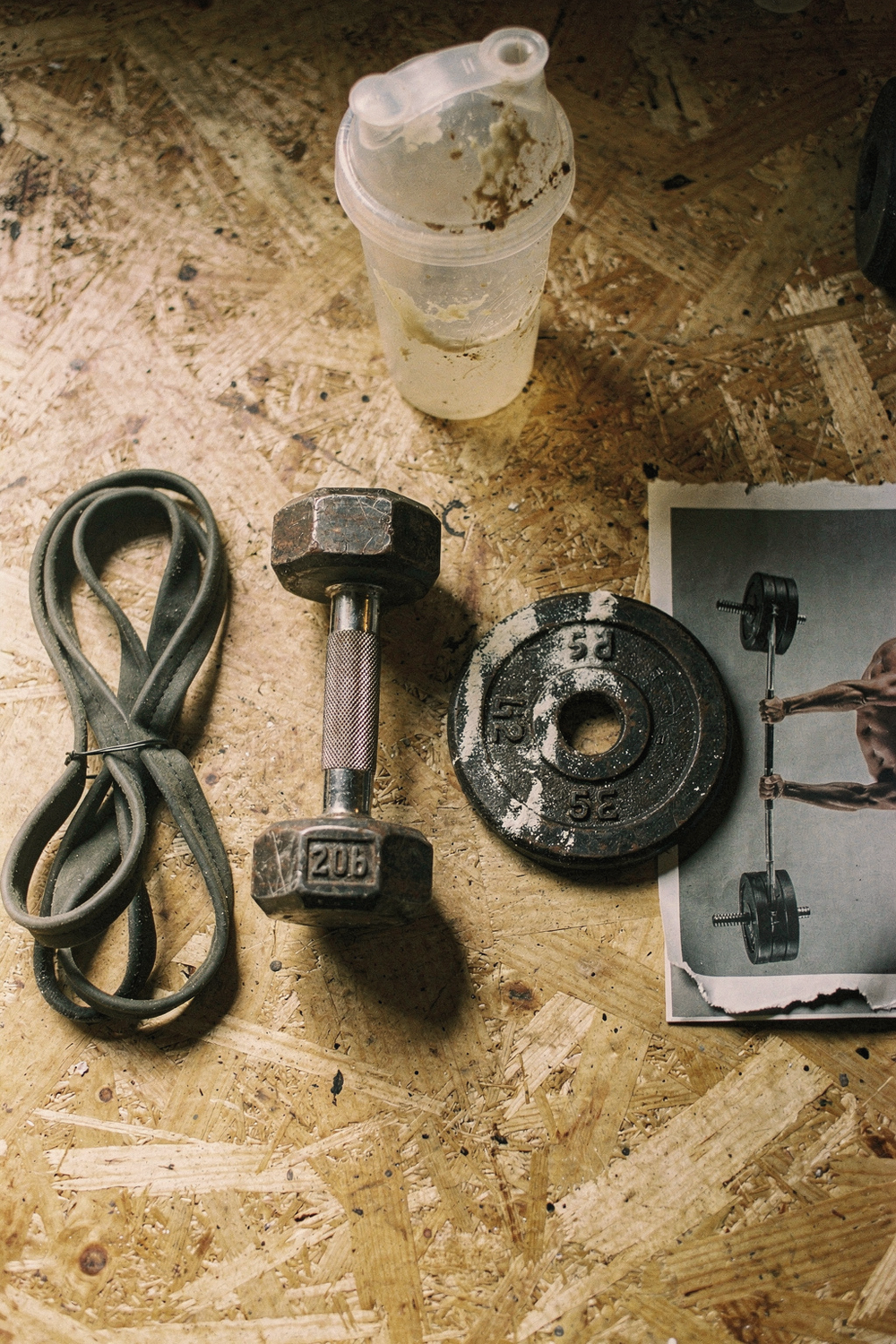
Phase 2 also introduces progress tracking through a workout journal. Recording lifts, sets, and reps keeps you motivated and makes progressive overload measurable rather than guesswork. The system is layering skills: you already know how to track nutrition from Phase 1, so tracking training feels natural rather than overwhelming.
The dependency web gets richer here. A protein-rich diet shifts from general awareness to intentional meal prepping. Sleep hygiene becomes about consistent patterns, not just hitting a number. Recovery now includes active recovery days, foam rolling, and post-workout stretching as distinct practices. Each week builds on the last, and the system manages the sequencing so you never have to wonder what comes next.
Phase 3: Intermediate strength and endurance (months 3-6)
This is where training gets interesting. Phase 3 introduces advanced techniques - supersets, circuit training, and drop sets to increase workout intensity. But it also adds something most pure strength programs ignore: cardiovascular training.
Moderate cardio sessions through running or cycling appear for the first time. Not to burn calories, but to improve overall fitness and recovery capacity. Better cardiovascular health means better blood flow to muscles, faster recovery between sets, and more endurance during longer training sessions. It's a support system for the strength work, not a replacement for it.
Nutrition optimization takes center stage. You're no longer just tracking macros - you're planning high-protein meals with intention, ensuring your nutrition directly supports muscle recovery. Mobility work continues throughout, protecting joint health as training volume increases.
The cross-pillar dependencies in Phase 3 show why body health is more than reps and sets. Mindfulness practices enhance focus during training. Sleep remains a constant priority. Foam rolling and stretching promote recovery. Community engagement through fitness groups provides accountability. Four pillars working together, managed through three daily actions.
Wellbody's progression system manages all of this behind the scenes. Your daily actions evolve across months - Phase 1 builds habits, Phase 2 builds strength, Phase 3 builds capacity, Phase 4 builds mastery. You don't plan the transitions. You just keep showing up, and the system introduces the right actions at the right time.
Phase 4: Advanced strength and specialization (months 6+)
Wellbody builds the system for you.
3 daily actions across fitness, nutrition, mindfulness, and recovery.


Phase 4 is where the program becomes yours. You choose a specialized training program aligned with your specific goals - whether that's aesthetics, athletic performance, or functional strength. The one-size-fits-all approach is gone. The system has spent six months learning what your body responds to, and now it helps you specialize.
Periodization enters the picture - cycling through phases of strength, hypertrophy, and recovery within your training plan. Training frequency increases as your body can handle more volume. And nutrition refinement goes deeper, experimenting with nutrient timing around workouts to maximize performance and recovery.

Regular self-assessment becomes a key activity: tracking performance metrics, body composition, and strength benchmarks on a monthly basis. This isn't vanity tracking. It's how you know whether your specialization is working and when to adjust.
Look at how far the dependencies have evolved. In Phase 1, the nutrition dependency was "focus on balanced meals to support energy levels." By Phase 4, it's "experiment with timing of nutrient intake around workouts to maximize performance and recovery." Same pillar, completely different sophistication. That progression happened gradually across six months. No single week felt like a leap.
What most programs get wrong
Most wellness apps hand you a Phase 2 or Phase 3 program on day one. Structured splits. Compound lifts. Progressive overload. It sounds advanced, and it is - that's the problem. Without the foundation habits from Phase 1, the program collapses under its own complexity. You skip meals, sleep poorly, skip mobility work, and eventually quit because you're sore, tired, and frustrated.
The other common failure is the opposite: programs that never progress. You do the same bodyweight routine for months because nobody told you when to move on. The challenge stays flat, motivation fades, and you plateau.
A phased system solves both problems. It holds you back early - no barbells in month one, no advanced techniques in month two - and then pushes you forward when you're ready. The progression is built into the structure, not left to willpower.
The long view
Six months of building muscle doesn't look like what the internet suggests. Month one is push-ups, food journals, and stretching. Month two is learning to track progress and finding a protein-rich diet that works for you. Month three introduces the barbell. Month four adds supersets and cardio. Month five refines your nutrition around your training. Month six, you're specializing.
Each phase looks nothing like the last. And that's exactly how it should work. A 30-day challenge gives you 30 days at one difficulty level. A phased system gives you six months of progressive growth where the actions, the intensity, and the supporting habits all evolve together.
Pick the goal. The system handles the progression. You just keep showing up.
About Wellbody
Wellbody is a body-health app that replaces the stack. One goal. Three daily actions. Fitness, nutrition, mindfulness, and recovery - connected behind the scenes so you don't have to manage the pieces. The plan adjusts around what you actually did today, and grows with you: month six looks nothing like month one. No dashboards, no re-planning. You just keep showing up.