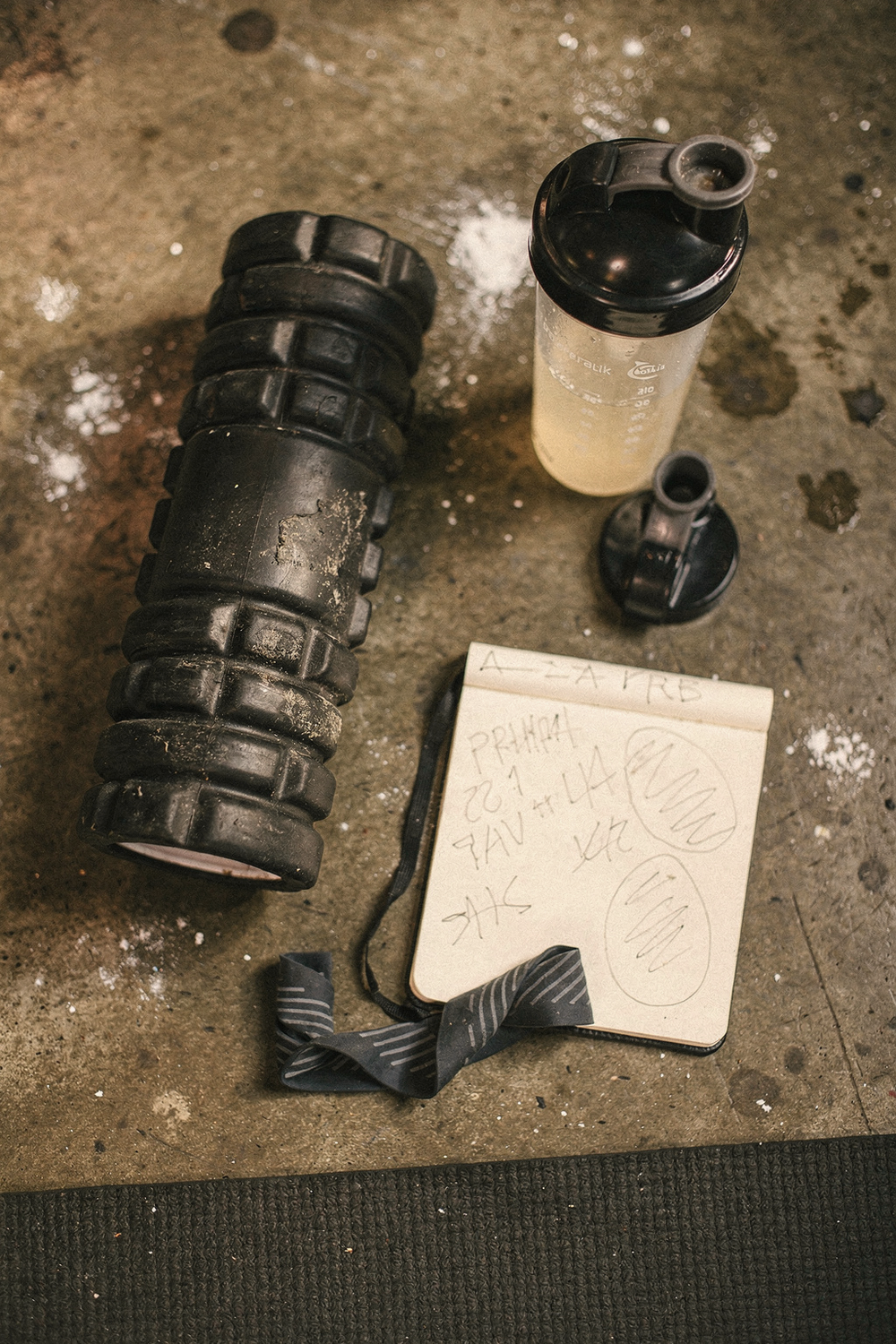
Ask someone how they recover from a hard workout and you will get the usual answers. Foam rolling. A rest day. Maybe a protein shake. These are fine. They are also the least interesting part of recovery.
Wellbody's Optimize My Recovery goal spans four phases over 12+ months. It starts where you would expect - stretching, journaling, hydration - but the rationale behind the system's design tells a different story than the one most wellness apps are selling. Buried in the weekly logic across 50+ weeks of structured progression are principles that challenge almost everything fit people assume about bouncing back.
Here are five of them.
1. You have to study your recovery before you can improve it
The first six weeks of the recovery plan do not ask you to recover better. They ask you to watch. Journal your daily activities, track sleep patterns, research recovery techniques, set goals. The system's rationale is blunt: "Starting with foundational activities that can be combined helps in forming a solid base for future practices."
By Week 3, the logic shifts from observation to direction: "Setting specific goals provides direction and motivation for recovery efforts." By Week 4: "Consistency is key in forming lasting habits, and maintaining practices solidifies the foundation."
The pattern is clear. The system treats self-knowledge as a prerequisite, not a bonus. You cannot optimize something you have not measured. Most people skip the observation phase entirely, jumping straight to ice baths and compression boots without knowing their baseline sleep quality, their actual hydration habits, or how their body responds to different types of stress. The data suggests that is backwards. Six weeks of watching yourself recover teaches you more than six months of guessing.
2. Recovery is a mental practice disguised as a physical one
Here is what most people miss about the recovery plan: by Phase 3, the first new activity introduced is not a physical technique. It is stress management. The rationale reads: "Starting with a high-startup commitment helps create a foundational understanding of stress management, essential for effective recovery."
Every single week across all four phases lists MentalWellness as a dependency. Phase 1: "Incorporate mindfulness to reduce stress and improve focus." Phase 2: "Utilize mobility work as a form of mindfulness." Phase 3: "Engage in activities that promote mental wellness, such as reading or light exercise." Phase 4: "Practice mindfulness before leading the session to reduce anxiety."

This is not a feel-good add-on. The system treats mental recovery as load-bearing infrastructure. Your body cannot repair what your nervous system will not release. Stress locks muscles, disrupts sleep, and degrades every physical recovery process you care about. A recovery plan that ignores your mental state is not a recovery plan - it is a stretching routine.
3. What you measure changes what you do
Phase 2 introduces recovery metric tracking in Week 3. The rationale: "Monitoring recovery metrics helps assess the effectiveness of recovery techniques and informs future adjustments." But the system does not stop at tracking. By Phase 3, Week 5, it asks you to correlate recovery with performance: "Understanding the relationship between recovery and performance will enhance motivation and adherence to recovery practices."
This two-step approach - first track, then correlate - changes the game entirely. Most people track sleep or soreness in isolation, treating each metric as its own story. The system forces you to connect the dots. How did Tuesday's mobility work affect Thursday's energy? What happens to your workout intensity after a week of consistent hydration?
The Phase 4 rationale makes the endgame explicit: "Feedback helps to identify areas for improvement and strengthens community ties." Recovery metrics stop being a personal dashboard and become a shared language. You are not just measuring recovery - you are building a feedback loop that gets smarter over time.
These principles are not tips buried in a blog post. They are structural decisions built into how Wellbody sequences every week of the recovery goal. The system teaches you to observe before changing, measure before optimizing, and connect mental practices to physical outcomes - not by telling you to, but by making each step depend on the one before it.
4. Your food and sleep are recovery tools, not separate goals
Every week of every phase - all 54 of them - lists Nutrition and Sleep as dependencies of recovery. Not occasionally. Not as suggestions. Every single week.
Wellbody builds the system for you.
3 daily actions across fitness, nutrition, mindfulness, and recovery.


Phase 1: "Focus on hydration and nutrition to support recovery practices" and "Ensure at least 7-8 hours of sleep each night to enhance recovery." Phase 2: "Focus on hydrating and nutrient-dense meals to support recovery" and "Aim for 7-9 hours of sleep each night to enhance recovery." Phase 3: "Focus on a balanced diet rich in omega-3s and antioxidants to support brain health" and "Aim for 7-8 hours of sleep each night for optimal cognitive function." Phase 4: "Incorporate nutrient-dense foods to support recovery."
Notice how the nutrition dependency evolves. Phase 1 is about hydration. Phase 2 adds nutrient timing. Phase 3 targets specific nutrients for brain health. Phase 4 introduces "advanced recovery foods." Sleep follows the same arc - from basic duration to sleep hygiene to quality monitoring. The system does not treat food and sleep as separate body health categories. It treats them as recovery inputs that need to scale alongside your recovery practice.

This is the mistake even serious athletes make. They build a recovery protocol in isolation - ice baths, massage guns, compression - while eating poorly and sleeping six hours a night. The data shows that recovery without nutrition and sleep support is like building a house without a foundation.
5. Recovery becomes real when you teach it to someone else
Phase 4's first activity is not a new technique. It is leading a recovery session with peers. The rationale: "Starting with a single high-startup social commitment helps build confidence and sets the stage for future activities." By Week 8: "Building a supportive community reinforces commitment to recovery activities." By Week 11: "A strong community fosters accountability and support for recovery practices."
This is a sharp turn from the first three phases, which are largely individual. The system waits until you have built a comprehensive toolkit, tracked your metrics, and refined your approach - then it asks you to share it. The rationale text reveals why: "Gathering feedback helps to identify areas for improvement and strengthens community ties."
Teaching forces clarity. When you explain your recovery approach to someone else, you discover what you actually understand versus what you have been doing on autopilot. You also gain something individual practice cannot provide - a perspective outside your own assumptions. The social layer is not a nice-to-have at the end. It is the mechanism that turns personal knowledge into lasting behavior.
The bigger picture
These five lessons - observe before optimizing, treat mental recovery as foundational, measure and correlate, integrate nutrition and sleep as recovery inputs, teach to solidify - are not specific to recovery. They are principles about how sustainable change works.
Study the system before you change it. Address root causes, not symptoms. Build feedback loops. Connect the domains. Share what you learn.
That is not a recovery plan. That is a framework for getting better at anything.
About Wellbody
Wellbody is a body-health app that replaces the stack. One goal. Three daily actions. Fitness, nutrition, mindfulness, and recovery - connected behind the scenes so you don't have to manage the pieces. The plan adjusts around what you actually did today, and grows with you: month six looks nothing like month one. No dashboards, no re-planning. You just keep showing up.