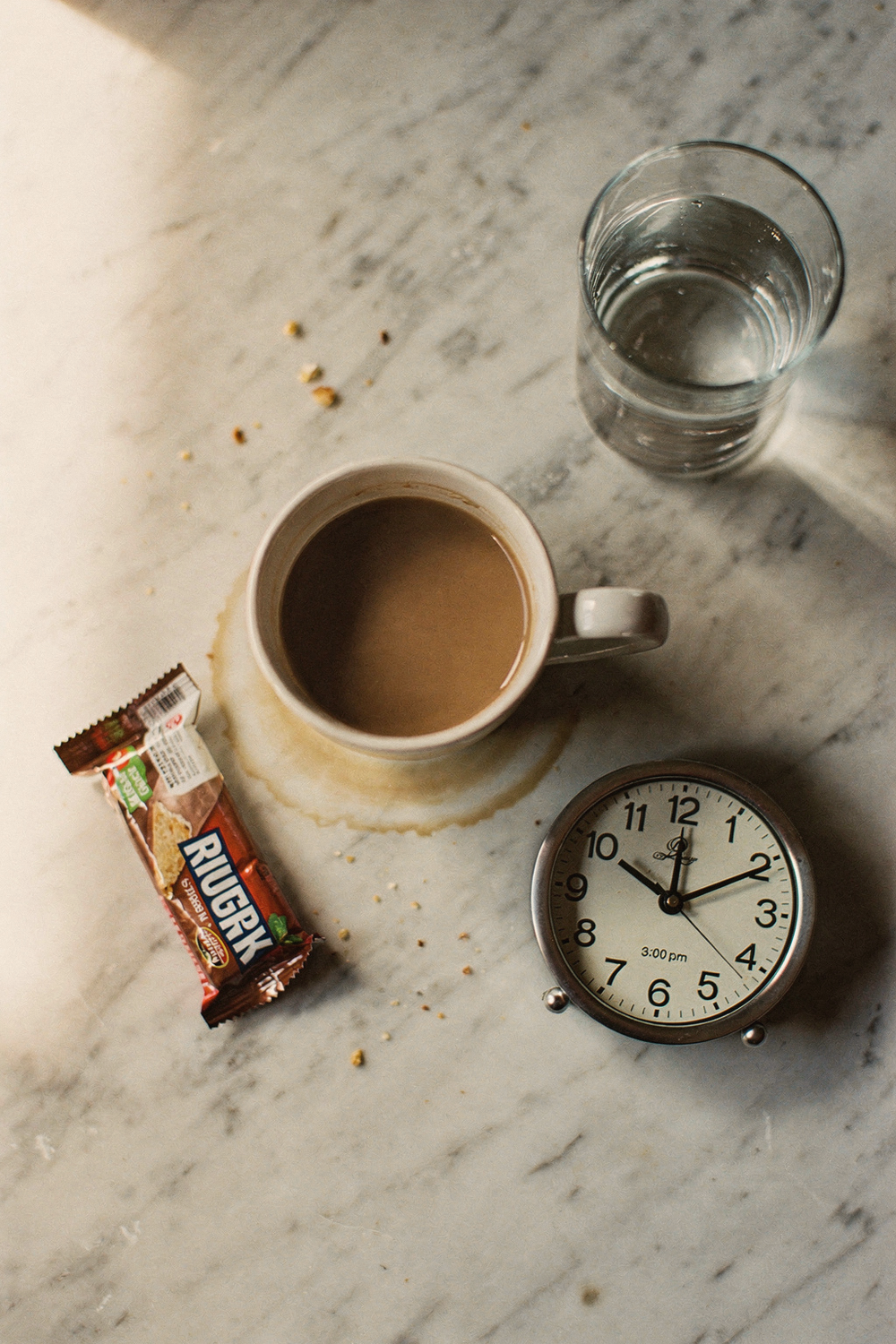
You know the feeling. It's 3pm, you're staring at a screen, and your brain has checked out. So you reach for coffee. Or sugar. Or both. By 5pm you're running on fumes and promising yourself tomorrow will be different.
Tomorrow is never different - because the problem isn't willpower. It's that you've never connected what you eat to how you feel. Most nutrition advice skips straight to meal plans and macros. Wellbody starts somewhere more honest: awareness.
When you choose "Eat for More Energy" as your goal, your first week doesn't hand you a grocery list. It asks you to pay attention. Here's what that actually looks like.
Day 1 - "The Kickoff"
You get three actions. The first is a reflection: start a food journal. Not a calorie log - a record of what you eat and how it makes you feel in terms of energy. The second is your first hydration check: grab a water bottle, set a target of 64 oz, and start tracking. The third is about setting up your environment for success - clearing your kitchen space so healthy choices become easier.
No recipes. No restrictions. Day 1 is about opening your eyes to what's already happening. The food journal isn't busywork - it's the foundation everything else builds on.
Day 2 - "Reflection and Awareness"
Yesterday you wrote down what you ate. Today the system asks you to read it back. Your evening reflection action has you spend 10 minutes reviewing yesterday's journal, looking for patterns between food and energy. Did that sandwich at noon hit different than the granola bar? Did skipping breakfast leave you foggy by 10am?
Hydration stays consistent - another 64 oz target. And your third action introduces nutrient-dense foods as a concept: prioritizing fruits, vegetables, whole grains, and lean proteins. Not a meal plan. Just a lens to look through.
Day 3 - "Building Consistency"
The journal continues, but now you're three days deep and the data is starting to mean something. Your water intake check-in evolves from a reminder into a habit checkpoint - have you met today's goal, and if not, can you close the gap right now?
The third action is the most interesting one so far: mindful eating. Not a diet rule - a practice. Slow down, pay attention to each bite, and notice how different foods land in your body. This is body health thinking. You're not counting anything. You're listening.
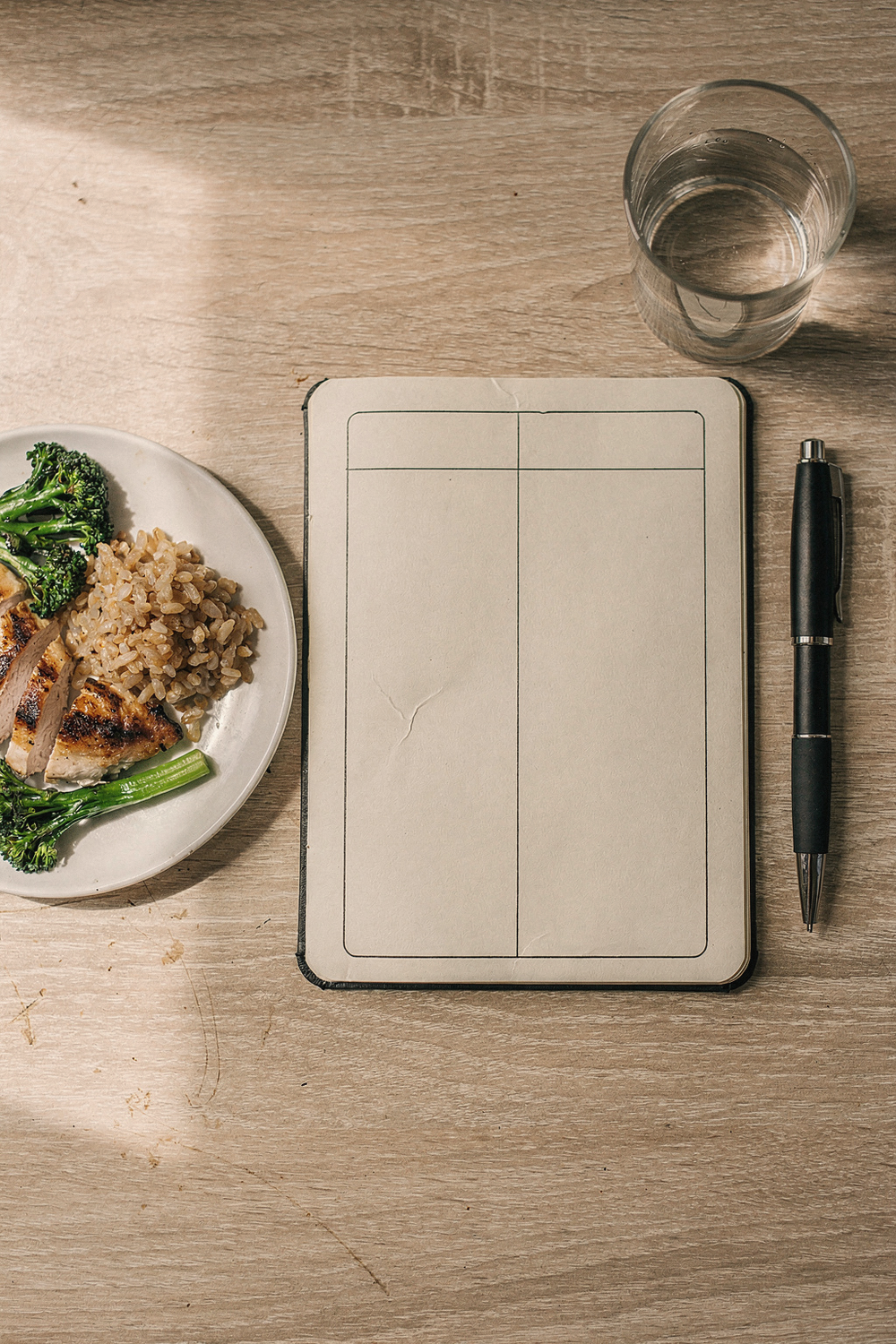
Days 4-5 - "Midweek Assessment" and "Energy Optimization"
Day 4 brings a midweek checkpoint. You've got three days of food journal data now, and the system asks you to look across all of it. What patterns are emerging? Maybe you notice that days with more protein at breakfast meant fewer afternoon crashes. Maybe you see that dehydration and fatigue track together more closely than you thought.
Day 5 pushes gently forward. Alongside the journal and hydration actions, you're introduced to meal prep for energy - planning ahead with nutrient-dense ingredients. It's not a rigid plan. It's asking you to take what you've learned from four days of observation and make one intentional choice about tomorrow.
Five days in and you haven't been handed a single recipe or told to cut out any food group. But you know more about how food affects your energy than most people figure out in years of dieting.
Day 6 - "Sustaining Momentum"
Wellbody builds the system for you.
3 daily actions across fitness, nutrition, mindfulness, and recovery.


The pace shifts. Day 6 is about consolidation, not new ground. Your weekly reflection asks you to review the full week of journal entries and notice what's changed. The hydration action reinforces consistency. And a focus on nutrient-dense choices ties together everything you've been observing.
In week 1, Wellbody delivers 21 actions across 7 days for the Eat for More Energy goal. Every single day includes a hydration action and a food journal reflection. The system doesn't bounce between topics - it drills into the connection between what you consume and how you feel, reinforcing it from a slightly different angle each day. Awareness first. Optimization later.
This is a breathing day. The system knows that six days of building new awareness needs a moment to settle. You're not being asked to do more. You're being asked to appreciate how far you've already come.
Day 7 - "Reflection and Planning Ahead"
The final day of week 1 brings a full-circle reflection. Your journal entry covers the entire week - what worked, what surprised you, what you want to change. Your hydration review looks at seven days of data and asks how water intake correlated with energy. And the last action is forward-looking: set specific goals for next week's nutrition and hydration.
By now, the 3pm crash isn't a mystery anymore. You've spent a week mapping it. You know which meals carry you through the afternoon and which ones leave you reaching for caffeine. That's not a diet. That's intelligence.

What happens next
Weeks 2 through 4 build on what you've learned. You'll start researching macronutrients and micronutrients that specifically support sustained energy. Simple meal plans built around whole foods replace the observation-only approach. Hydration monitoring gets more nuanced. And the system introduces energy-boosting recipes you can actually make.
By Phase 2, you're learning about glycemic index, building balanced meals with intention, and experimenting with healthy snacks that sustain you between meals. By Phase 3, you're testing meal timing strategies and tracking your personalized energy patterns. But none of that works without week 1 - the week you stopped guessing and started paying attention.
The fix for being always tired isn't another coffee. It's seven days of honest observation - and a system that turns what you notice into what you do next.
About Wellbody
Wellbody is a body-health app that replaces the stack. One goal. Three daily actions. Fitness, nutrition, mindfulness, and recovery - connected behind the scenes so you don't have to manage the pieces. The plan adjusts around what you actually did today, and grows with you: month six looks nothing like month one. No dashboards, no re-planning. You just keep showing up.