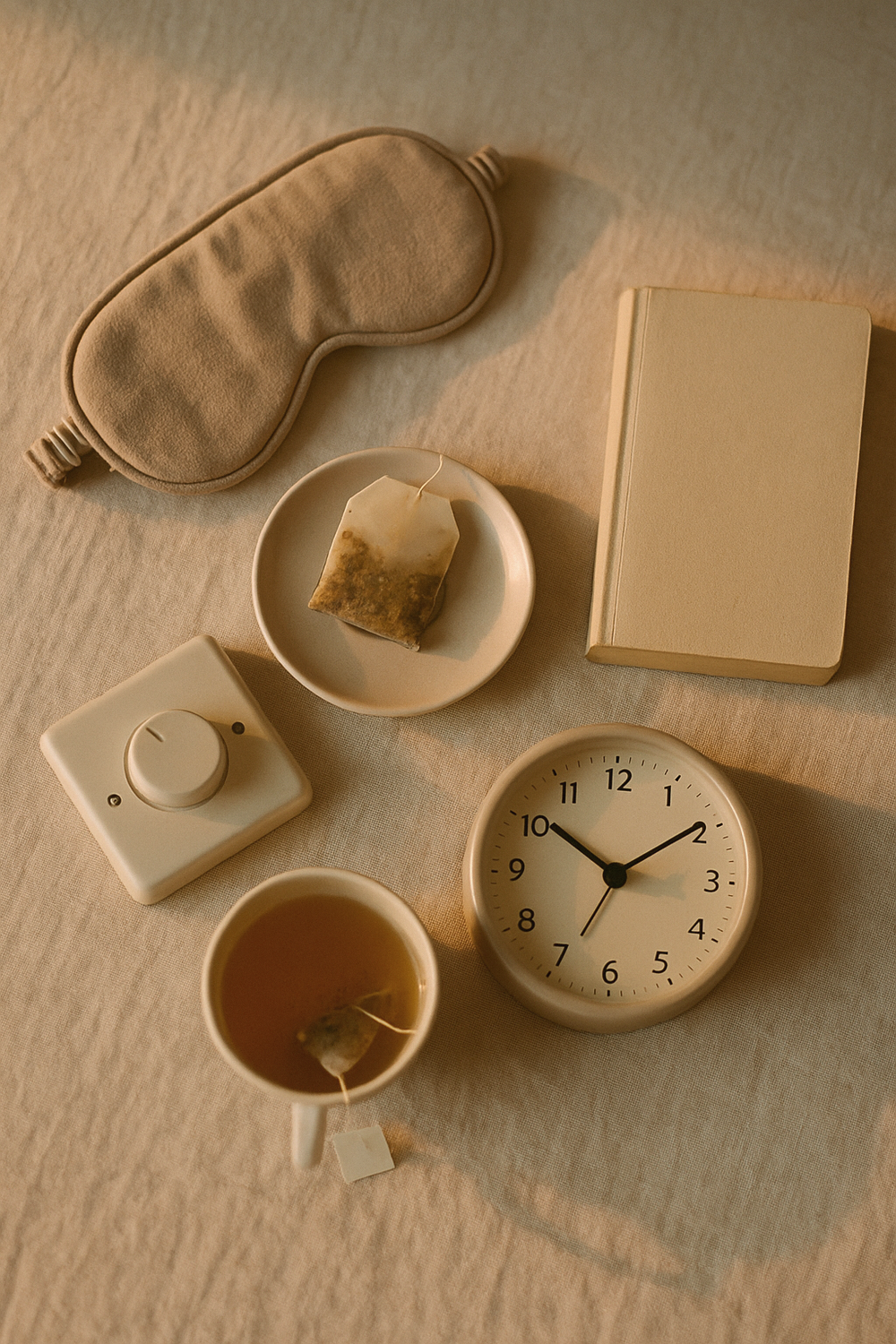
Not every sleep fix takes weeks to show up. Some of the most effective changes happen the same night you make them. The five actions below are drawn from Phase 1 and Phase 2 of structured sleep improvement programs - the ones that are placed first because they have the fastest and most reliable impact.
You do not need to do all five perfectly. Pick the ones you are not already doing and try them tonight. Even two or three will move the needle.
1. Set a specific bedtime and stick to it
A consistent sleep schedule is the highest-leverage habit in sleep improvement. Your body clock - the circadian rhythm that regulates when you feel alert and when you feel sleepy - is set and maintained by regularity. Go to bed at the same time tonight and aim for the same time tomorrow. You do not need a perfect schedule right away. You need a consistent one. Pick a time that allows 7 to 9 hours before you need to wake up, commit to it this evening, and hold the wake time even if the bedtime slips slightly. The wake time is the anchor.
2. Make your room darker than you think it needs to be
Even small amounts of light during sleep - a standby LED on a TV, streetlight through thin curtains, a hallway light visible under the door - can suppress melatonin and fragment the early phases of sleep. Most people are not aware of how much ambient light is in their room until they look for it with this specific intention. Tonight, cover or remove indicator lights, draw your curtains fully, put your phone face-down or out of the room entirely. If light control in your space is limited, a simple sleep mask costs a few dollars and works just as well.
3. Lower the room temperature before you get into bed
Your core body temperature needs to drop slightly for sleep to initiate. A cooler room - somewhere between 60 and 67 degrees Fahrenheit - supports that process. Turn the thermostat down an hour before bed, open a window if the weather allows, or switch to lighter bedding if you tend to overheat. This is one of the fastest environmental changes and one of the most consistently effective.
4. Stop screens an hour before you plan to sleep
Darkness and a cool room are not comfort preferences - they are biological inputs. Your body reads these signals as cues that it is time to sleep. Setting them up consistently trains your system to begin the sleep process before you even get into bed. These two actions alone can shorten the time it takes to fall asleep by 10 to 20 minutes.
Wellbody builds the system for you.
3 daily actions across fitness, nutrition, mindfulness, and recovery.


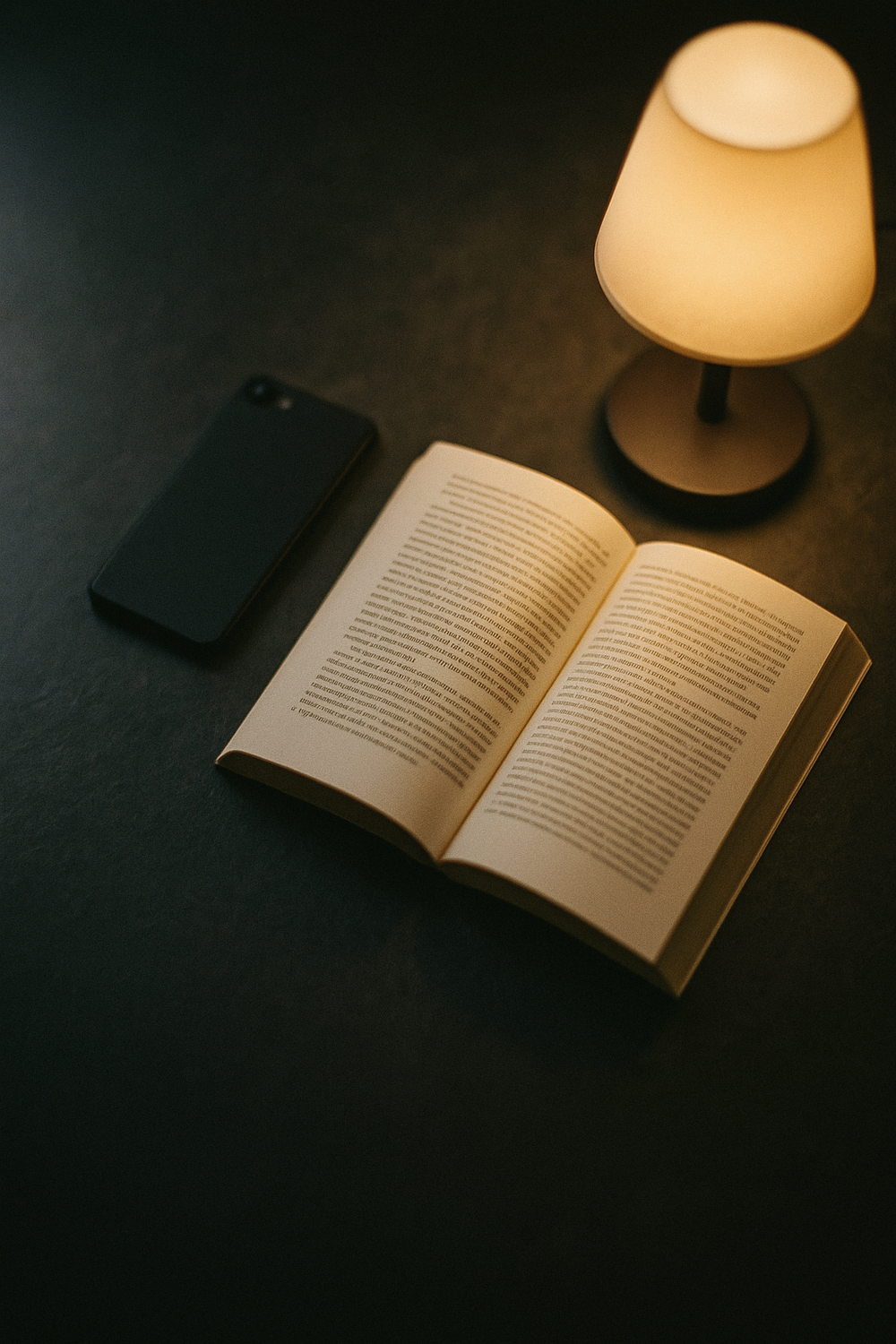
Phone and laptop screens emit light in the blue spectrum, which delays melatonin production and keeps your brain in a state of alertness. One hour before your target bedtime, put your phone in another room or switch to a book, light stretching, or a non-stimulating conversation. If one hour feels too long to start, try 30 minutes - that alone will make falling asleep noticeably easier.

5. Do three minutes of slow breathing before you lie down
A brief relaxation technique done before you get into bed - not in bed - activates the parasympathetic nervous system and signals the transition from waking to sleep mode. A simple approach: inhale for four counts, hold for four, exhale for six. Three minutes is enough. Do it sitting on the edge of the bed or in a chair nearby. Keeping this outside the bed reinforces the association between your bed and sleep rather than winding down.
What to notice tomorrow morning
When you wake up, note two things: roughly how long it felt like it took to fall asleep, and how you feel in the first ten minutes of being awake. These two data points are the fastest indicators of sleep quality and do not require any special equipment. Your own subjective impression, noted briefly in a journal or a quick phone note, will reveal a clear pattern within five to seven days. You are not diagnosing yourself - you are collecting the baseline information that makes any further adjustments more targeted.
Tonight is just one night. But the habits that create consistent sleep quality are built from individual nights where you made one or two better choices. Start with whichever items on this list you are not already doing, and add the others gradually over the next few evenings. You do not need to overhaul your routine to see a difference - you just need to pick up one thing you were not doing before.
About Wellbody
Wellbody is a body-health app that replaces the stack. One goal. Three daily actions. Fitness, nutrition, mindfulness, and recovery - connected behind the scenes so you don't have to manage the pieces. The plan adjusts around what you actually did today, and grows with you: month six looks nothing like month one. No dashboards, no re-planning. You just keep showing up.