There is a specific order to fixing sleep, and most people start in the middle of it. They try breathing exercises, melatonin, or white noise machines before addressing the things actively working against their sleep every night. Then the techniques underperform and sleep stays broken. Phase 1 of a structured sleep improvement program is not about techniques at all - it is about setup. The techniques come after the foundation is in place. Getting that order right is the difference between sleep tools that work and sleep tools that seem to work for a few nights and then fade.
Your environment first
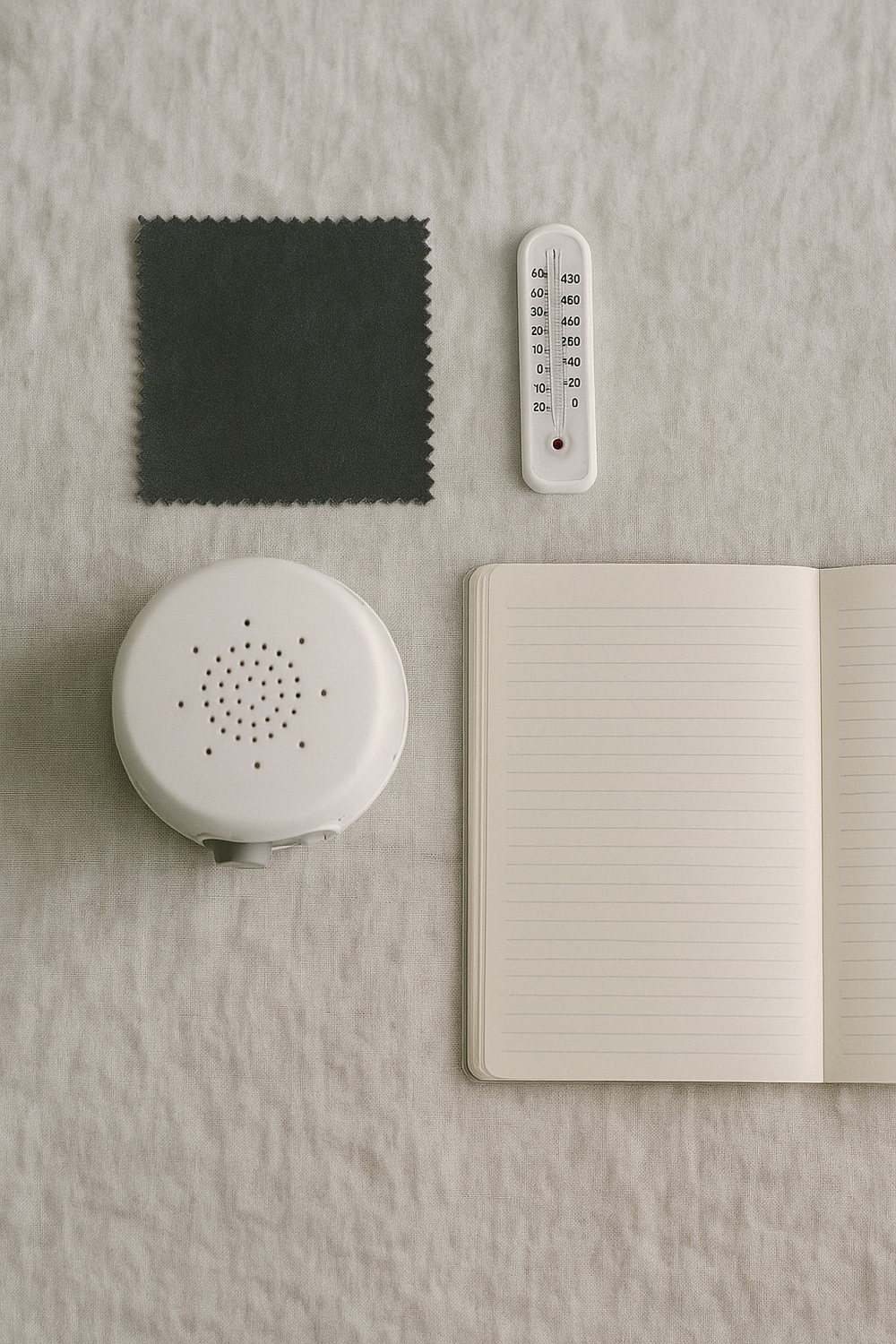
Before you try to sleep better, your sleep environment needs to be right. That means three things: darkness, cool temperature, and quiet. These are not comfort preferences - they are biological inputs. Your body reads darkness as a signal to produce melatonin. A room temperature between 60 and 67 degrees Fahrenheit supports the core body temperature drop that initiates sleep. Consistent quiet prevents the micro-arousals that fragment sleep without fully waking you.
Get blackout curtains if streetlights or morning sun come through your windows. Turn the thermostat down a few degrees at night. If ambient noise is unavoidable, a white noise machine or fan that provides consistent background sound is more effective than silence in a noisy environment. These are the prerequisites. Without them, any technique you add is working against a headwind.

A consistent schedule next
Your body runs on a circadian rhythm - an internal clock set and maintained by consistent timing. Going to bed and waking at the same time every day, including weekends, is the single most effective thing you can do for sleep quality. Most people maintain a schedule on weekdays and abandon it on weekends. The result is social jet lag - your body clock shifts over the weekend and then has to shift back, which is why Sunday nights are often the hardest to fall asleep and Monday mornings feel brutal. Picking a consistent wake time seven days a week and protecting it is more powerful than any supplement.
Eliminate the active disruptors
Before you add anything to your sleep routine, remove what is working against it. Caffeine stays in your system for six to eight hours - a 3 PM coffee can still affect your ability to fall asleep at 10 PM. Alcohol may help you fall asleep initially but disrupts sleep architecture in the second half of the night, which is when the most restorative sleep occurs. Large meals close to bedtime raise core body temperature and can cause discomfort that fragments sleep.
None of these require permanent elimination. But during the first two to four weeks of improving your sleep, reducing their impact gives you a clear picture of what your sleep actually looks like without interference. You cannot accurately assess what needs fixing while the major disruptors are still active.
A consistent wake time is more important than a consistent bedtime. Your body's sleep pressure builds during waking hours and releases at sleep onset. Wake at the same time every day and sleep pressure will reliably peak at roughly the same time each night, making it easier to fall asleep consistently - even if you shift your bedtime slightly.
Wellbody builds the system for you.
3 daily actions across fitness, nutrition, mindfulness, and recovery.



A basic tracking system
A sleep journal is a Phase 1 activity in structured sleep programs - not because journaling is inherently relaxing, but because you need data. Without tracking, you are guessing about your sleep patterns rather than observing them. A simple log takes two minutes and covers four things: when you got into bed, when you think you fell asleep, how many times you woke up, and how you felt in the morning.
Even one week of consistent tracking will show patterns you were not aware of. Most people discover their sleep debt is worse on certain days of the week, that they consistently wake around the same time each night, or that their estimate of how long it takes to fall asleep is significantly off from what they actually experience. The journal does not fix sleep - it tells you what you are actually dealing with.
Once these are in place
After two weeks of consistent environment setup, a fixed schedule, disruptor reduction, and basic tracking, you will have enough information to know what techniques are actually worth adding. Relaxation exercises, breathing practices, pre-sleep rituals, and dietary adjustments all become more effective when the foundation is solid.
The first week will feel like you are doing less than you want to. That is the right feeling. The setup phase is not glamorous but it is why the techniques work when they are eventually layered in. Most people who say a sleep approach did not work for them tried the techniques without the foundation. Put the foundation in first.
About Wellbody
Wellbody is a body-health app that replaces the stack. One goal. Three daily actions. Fitness, nutrition, mindfulness, and recovery - connected behind the scenes so you don't have to manage the pieces. The plan adjusts around what you actually did today, and grows with you: month six looks nothing like month one. No dashboards, no re-planning. You just keep showing up.